When buyers compare the prices of porcelain tiles, it is common to find significant differences between products that appear similar at first glance. Two tiles may have the same size and a similar marble, stone, or concrete appearance, yet their prices can vary considerably.
This is because the price of porcelain tiles is determined by much more than appearance. Factors such as raw materials, tile size, water absorption, surface finish, printing technology, production standards, quantity, packaging, and shipping conditions can all influence the final cost.
For importers, distributors, contractors, and project buyers, understanding these factors makes it easier to compare quotations and select the right product without focusing only on the lowest price.
1. Raw Materials and Production Costs
The first factor affecting the price of porcelain tiles is the cost of raw materials.
Porcelain tiles are generally manufactured from carefully selected mineral materials that are processed, pressed, dried, and fired at high temperatures. The quality and formulation of these materials can affect the production cost as well as the technical performance of the finished tile.
Energy consumption is another important consideration. Tile production requires large amounts of heat during the firing process, so changes in electricity and natural gas prices can directly influence manufacturing costs.
In addition, labor, factory maintenance, equipment depreciation, quality control, and environmental compliance all contribute to the final factory price.
For this reason, a quotation for porcelain floor tiles should not be evaluated only by comparing the price per square meter. Buyers should also consider the technical specifications and manufacturing standards behind the price.
2. Tile Size
Tile dimensions have a major impact on pricing.
Common sizes such as 600x600 mm are widely used for residential and commercial flooring and are generally easier to manufacture, package, and transport. Larger formats, such as 600x1200 mm, 750x1500 mm, or even larger slabs, can require more specialized production and handling.
Large-format products are increasingly popular because they create fewer grout joints and provide a more continuous visual effect. However, their larger dimensions also create additional challenges during pressing, firing, quality inspection, packaging, and transportation.
For buyers searching for large format porcelain tiles, the price should therefore be considered together with the size, thickness, production requirements, and packaging method.
Size also affects container loading efficiency. A tile with a particular size may allow a different number of cartons or square meters to be loaded into a container. Therefore, the actual landed cost per square meter can sometimes differ from the factory quotation.
3. Water Absorption Rate
Water absorption is one of the most important technical specifications when comparing porcelain tiles.
Generally, porcelain tiles have very low water absorption, which contributes to their density, durability, and suitability for many demanding applications. Products with different absorption specifications may require different raw material formulations and firing processes.
When comparing porcelain tile price, buyers should check the stated water absorption rate instead of assuming that all products labeled “porcelain” have exactly the same performance.
For example, a product designed to meet a lower absorption specification may require more controlled production conditions and higher-quality raw materials. This can increase manufacturing costs.
For commercial projects, hotels, shopping centers, and other applications where technical performance is particularly important, buyers should evaluate both price and specification.
4. Surface Finish
The surface finish is another factor that affects tile prices.
Common finishes include glossy, matte, polished, satin, and other specially treated surfaces. A basic matte or glossy finish may have a different production cost from a highly polished or specially processed surface.
For example, polished products can require additional grinding and polishing processes after firing. Matte products may require specific surface treatment or firing control to achieve a consistent appearance.
The choice between glossy porcelain tiles and matte porcelain tiles is therefore not simply a design decision. It can also affect the manufacturing process and final quotation.
For buyers, it is useful to specify the required finish clearly when requesting a quotation. Otherwise, different suppliers may quote different specifications while using similar product descriptions.
5. Printing and Surface Technology
Modern tile manufacturing allows manufacturers to reproduce the appearance of natural marble, limestone, travertine, concrete, and other materials with increasingly realistic digital printing.
The printing technology and number of printing stages can affect production costs.
Basic designs may require relatively straightforward printing, while more detailed products with multiple colors, high-resolution patterns, and realistic natural-stone effects can require more advanced digital inkjet technology.
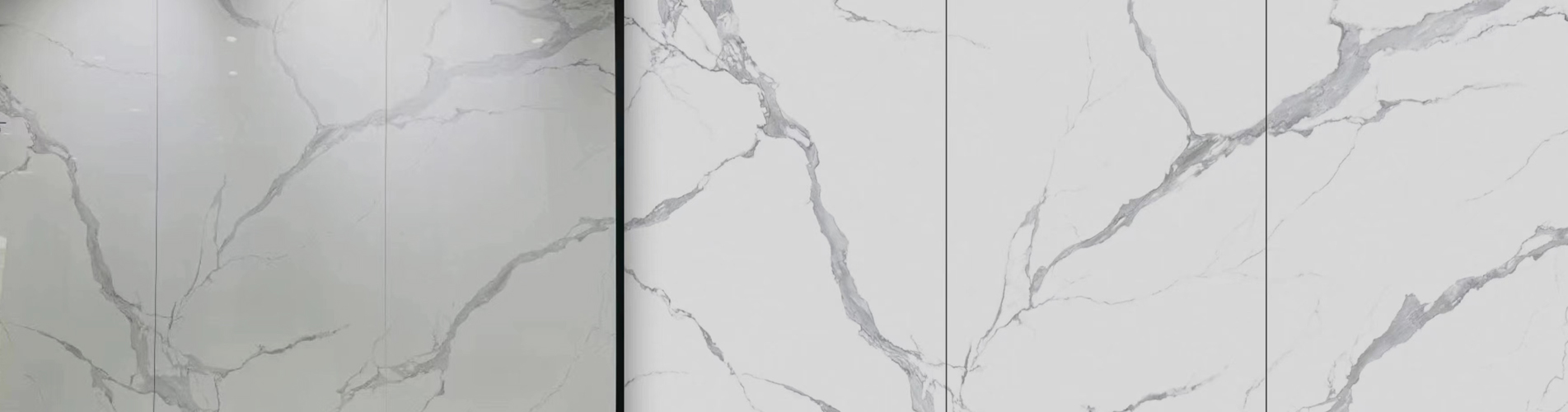
This is especially relevant when purchasing marble look porcelain tiles. The visual quality depends not only on the raw tile body but also on the design development, digital printing, ink quality, and surface treatment.
Some products also use multiple different faces to create a more natural random appearance. Developing and managing multiple faces can increase design and production complexity.
6. Design and Number of Faces
Natural stone does not have an identical pattern repeated across every piece. To reproduce this visual effect, manufacturers can create multiple faces for one tile design.
A product with four faces may already provide some variation, while designs with eight or more faces can create a more random and natural appearance.
This matters particularly for marble look tiles and stone-look products.
More faces require additional design files, printing control, production management, and quality inspection. As a result, a tile with a highly varied random pattern may cost more than a simple repeating design.
For projects where appearance is important, buyers should ask how many different faces are included before comparing prices.
7. Quality Standards and Quality Control
Different suppliers may operate according to different quality requirements.
Quality control can include dimensional inspection, flatness, surface inspection, color consistency, water absorption testing, breaking strength, and other technical checks.
A factory supplying tiles for international markets may also need to maintain consistent quality across large production batches. This requires trained workers, inspection procedures, laboratory testing, and production monitoring.
Therefore, when comparing ceramic and porcelain tiles, buyers should make sure they are comparing products with similar quality standards.
A cheaper quotation may sometimes reflect differences in raw materials, dimensional tolerance, surface quality, sorting standards, or inspection requirements rather than simply a lower profit margin.
8. Quantity and Order Size
Order quantity has a direct influence on the final price.
Large orders allow manufacturers to spread setup, production, packaging, and administrative costs across more square meters. This can make the price per square meter more attractive.
For international B2B buyers, the quantity is particularly important because production and container loading are usually calculated according to the full order rather than individual boxes.
For example, purchasing several thousand square meters of one design can provide better production efficiency than purchasing a small quantity across many different designs.
This is why wholesale porcelain tiles are often quoted differently from small quantities purchased for individual residential projects.
However, buyers should also consider whether the minimum order quantity fits their actual sales volume. A lower unit price does not necessarily mean a better deal if the buyer needs to hold excessive inventory.
9. Customization and OEM/ODM Requirements
Customization can also change the price of porcelain tiles.
Standard products that are already in regular production are usually easier to manufacture because the design, printing parameters, packaging, and production process have already been established.
By contrast, custom orders may involve new colors, patterns, sizes, finishes, packaging designs, logos, or other requirements.
For businesses looking for custom porcelain tiles, it is important to provide complete specifications when requesting a quotation. Even small changes can affect production costs.
OEM and ODM projects may also require additional design development, sample approval, testing, packaging preparation, and production setup.
The more customized the product, the more important it becomes to discuss the entire specification rather than asking only for a price per square meter.
10. Packaging
Packaging is sometimes overlooked when buyers compare tile prices.
Porcelain tiles are heavy and fragile, so suitable cartons and protective packaging are essential for international transportation.
Different packaging requirements can include carton thickness, printed cartons, pallets, corner protection, plastic wrapping, and customized packaging.
A standard export carton may have a different cost from customized retail packaging.
For porcelain tile suppliers exporting internationally, packaging is particularly important because the product may travel thousands of kilometers before reaching the final warehouse or construction site.
A slightly higher product price may sometimes include stronger packaging that reduces the risk of damage during transportation.
11. Shipping and Container Loading
For international buyers, the factory price is only one part of the total purchasing cost.
Porcelain tiles are heavy products, so freight, container capacity, port charges, loading efficiency, and destination costs can significantly affect the final landed cost.
The number of square meters that can be loaded into a 20-foot container depends on tile size, carton configuration, pallet requirements, and the weight limitation of the shipment.
For example, two tiles with different dimensions may have different loading efficiencies even if their factory prices per square meter are similar.
Therefore, when comparing porcelain tiles wholesale, buyers should consider the complete cost from the factory to their warehouse rather than looking only at the FOB or EXW price.
12. Market Position and Supplier Type
The type of supplier can also influence pricing.
A manufacturer selling directly from its own factory may have a different cost structure from a trading company that purchases products from another factory.
At the same time, not every factory has the same production capabilities, equipment, quality standards, or export experience.
A supplier offering factory direct porcelain tiles may be able to provide more direct communication regarding production, customization, samples, and quality control. However, buyers should still evaluate the supplier based on actual product specifications, production capacity, consistency, and service rather than assuming that “factory direct” automatically means the lowest price.
The goal should be to find the best balance between product quality, specifications, service, and total purchasing cost.
13. How Should Buyers Compare Porcelain Tile Prices?
When comparing quotations from different suppliers, buyers should create a consistent specification before making a decision.
At minimum, the quotation should clearly state:
Tile size
Material type
Water absorption
Surface finish
Thickness
Design and number of faces
Printing technology
Packing method
Quantity
MOQ
Trade terms
Production lead time
This makes it much easier to determine whether two quotations are actually for comparable products.
For example, one supplier may quote a lower price for a standard glossy product, while another supplier may quote a slightly higher price for a matte product with different technical specifications and more complex printing. Without comparing the details, the price difference can be misleading.
Conclusion
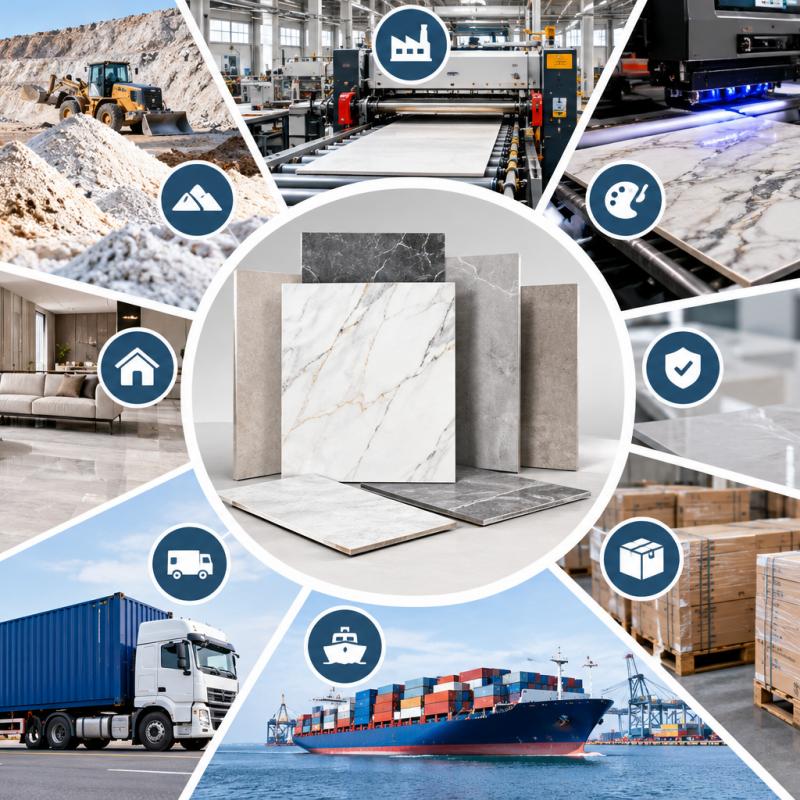
The price of porcelain tiles is influenced by a combination of manufacturing, technical, design, packaging, quantity, and logistics factors. Raw materials and energy costs affect the basic production cost, while tile size, water absorption, surface finish, printing technology, and quality standards influence the technical and manufacturing requirements.
For B2B buyers, order quantity, customization, packaging, container loading, and transportation can have an equally important impact on the final purchasing cost.
Therefore, the cheapest quotation is not always the most cost-effective option. A better approach is to compare tiles based on the same specifications, calculate the total landed cost, and evaluate quality and consistency alongside price.
Whether you are sourcing porcelain floor tiles, large format porcelain tiles, marble-look products, or customized designs, understanding what drives the price can help you negotiate more effectively, avoid misleading comparisons, and choose products that provide better long-term value for your market.
 What Factors Affect the Price of Porcelain Tiles?









 IPv6 network supported