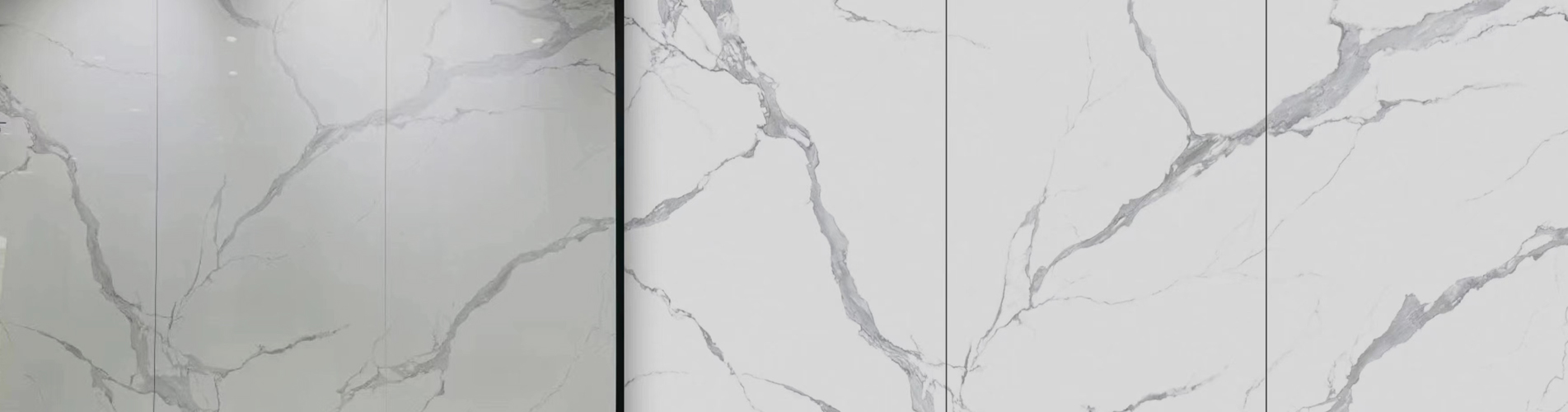
Interior design trends continue to change, but some tile finishes remain popular because they combine practical benefits with a strong visual effect. Glossy ceramic tile is one of them. Although matte surfaces have become increasingly common in modern interiors, glossy tiles are still widely used in residential, commercial, hospitality, and retail spaces.
So, are glossy ceramic tiles still popular for modern interiors? The answer depends on the design style, application area, maintenance expectations, and the overall look that a project is trying to achieve. Rather than disappearing from the market, glossy tiles have evolved into a more versatile option for contemporary spaces.
One of the main reasons glossy tiles continue to attract buyers is their reflective surface. Unlike matte tiles, which absorb more light visually, glossy surfaces reflect light and can make an interior feel brighter and more open.
This characteristic is especially useful in smaller rooms. A glossy wall tile can reflect natural or artificial light across the room, helping create a cleaner and more spacious appearance. This is one reason glossy finishes remain common in bathrooms, kitchens, entrance areas, and other spaces where designers want to maximize the feeling of light.
Glossy tiles can also create a more polished appearance. Depending on the pattern and color, they can fit modern, minimalist, contemporary, luxury-inspired, or classic interiors.
For manufacturers and wholesalers, this versatility makes glossy ceramic tiles an important part of many product collections.
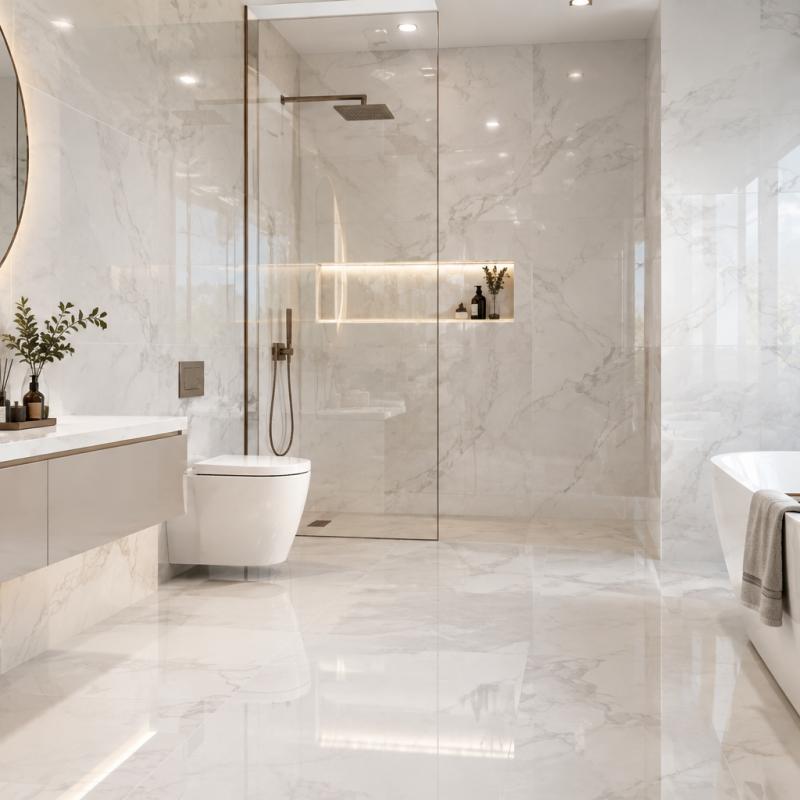
The popularity of glossy tiles becomes clearer when they are compared with matte surfaces.
Matte tiles generally create a softer and more understated appearance. They are often selected for natural, minimalist, industrial, or contemporary interiors where designers want to reduce reflections and create a more relaxed visual effect.
Glossy tiles, on the other hand, emphasize color, pattern, and surface movement. A marble-look pattern, for example, can appear more visually striking when combined with a polished or glossy finish.
This does not mean that one finish is universally better than the other. The choice depends on the intended application.
For example, a designer may choose matte porcelain tile for a large residential floor while selecting glossy ceramic wall tiles for the bathroom walls. Combining different finishes within the same project can also create contrast without introducing completely different materials.
Glossy ceramic tiles are particularly popular for wall applications.
Bathrooms are one of the most common applications for glossy bathroom tile. Light-colored glossy tiles can make a relatively small bathroom appear brighter and more spacious.
White, beige, light gray, marble-effect, and other neutral designs are frequently used for bathroom walls. Larger formats can create fewer visible joints, while smaller formats can introduce more decorative detail.
Glossy tiles can also work well as feature walls. Instead of covering every surface with a highly reflective finish, designers may use glossy tiles on one wall and combine them with matte or textured materials elsewhere.
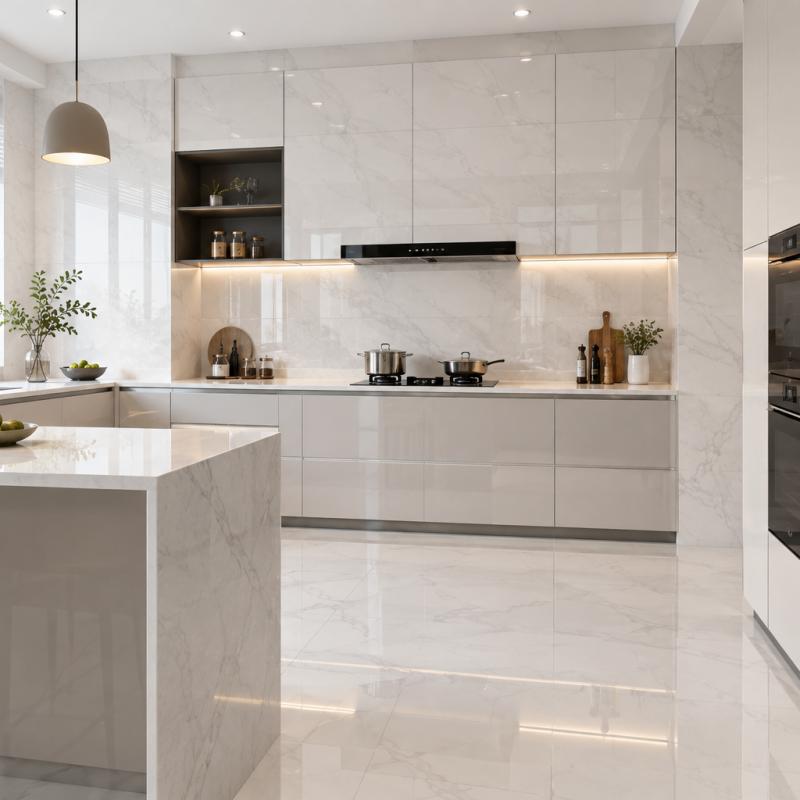
Glossy kitchen tile is another established application. Kitchen walls, backsplashes, and cooking areas can benefit from a smooth, visually clean surface.
Glossy finishes can also make decorative patterns more noticeable. Marble-effect designs, subtle stone patterns, geometric graphics, and solid colors can all work with a glossy surface.
For residential projects, buyers may focus on appearance and cleaning convenience. For commercial projects, designers and contractors may place greater emphasis on specifications, consistency, availability, and long-term supply.
Glossy ceramic tiles are not limited to bathrooms and kitchens. They can also be used for feature walls in living rooms, entrances, hotels, restaurants, and commercial spaces.
Large-format ceramic wall tile can create a continuous visual effect, especially when the design contains subtle veining or stone-inspired patterns.
For projects looking for a modern appearance, large formats such as 600x1200 mm can provide a strong visual presence while reducing the number of grout lines compared with smaller formats.
Large-format tiles have become an important part of modern tile design. Sizes such as 600x600 mm, 600x1200 mm, and other large formats are frequently considered for contemporary residential and commercial projects.
A large glossy tile can combine two popular design characteristics: a large visual surface and light reflection.
For example, a 600x1200 ceramic tile with a marble-effect design can be used to create a visually continuous wall. The larger format allows the pattern to occupy more of the surface, while the glossy finish can enhance the contrast and movement of the design.
However, large-format tiles also require suitable installation conditions. Wall flatness, handling, cutting, adhesive selection, and installation experience become increasingly important as tile size increases.
For wholesalers and project buyers, these practical considerations are just as important as appearance.
Marble-look surfaces continue to be an important design direction in the tile market. Glossy finishes can make marble-inspired patterns more noticeable because reflections interact with the veining and background color.
A marble look ceramic tile can offer the visual character of natural stone while providing a manufactured tile format that is easier to standardize across a large project.
Popular color directions include white with gray veining, warm beige tones, soft cream backgrounds, and darker designs with stronger veins. The right choice depends heavily on the target market and the overall interior concept.
For B2B buyers, consistency is particularly important. When purchasing tiles for a hotel, apartment development, retail project, or other large application, buyers generally need the same design to remain consistent across multiple production batches.
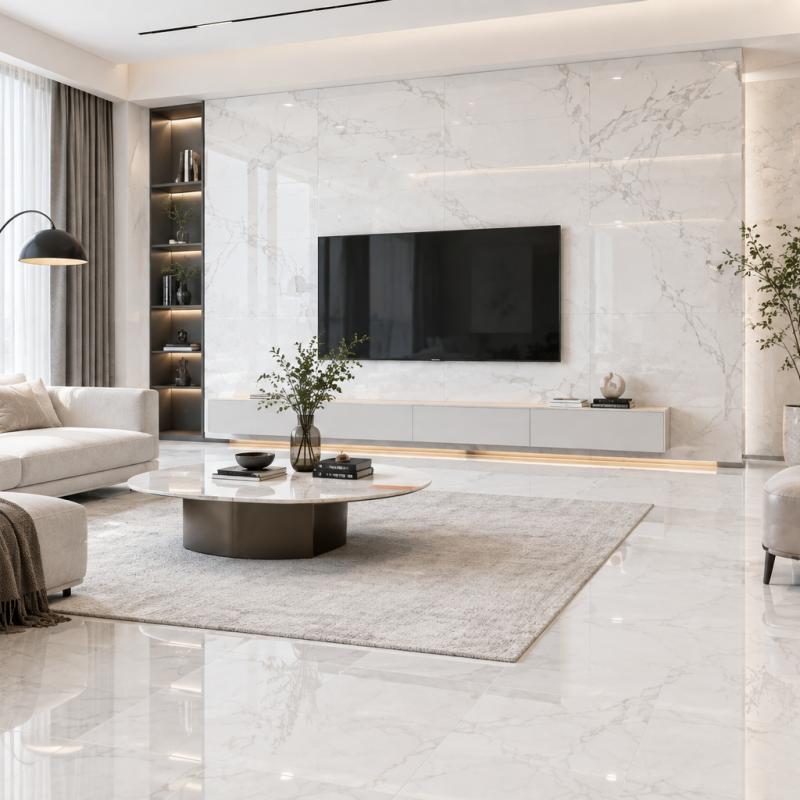
Modern interiors do not necessarily mean that every surface needs to be matte.
In minimalist design, glossy tiles can be used selectively to introduce light and visual contrast. For example, a neutral glossy wall can be paired with matte flooring, wood-effect materials, metal elements, or textured surfaces.
This combination can prevent the interior from looking too flat.
Another advantage is that glossy surfaces can emphasize simple colors. A plain white or light beige tile may look relatively basic with a completely flat surface, but a glossy finish can give it more depth through light reflection.
This makes glossy tiles suitable for projects where the designer wants a clean appearance without using complicated patterns.
Although glossy ceramic tiles remain popular, they are not automatically suitable for every application.
The first consideration is the location. Glossy tiles are commonly selected for walls, backsplashes, bathrooms, and decorative areas, while flooring requires careful consideration of the product's technical specifications and intended use.
The second consideration is maintenance. Glossy surfaces can make dirt, water spots, fingerprints, or streaks more visible under certain lighting conditions. This may be less noticeable in some matte finishes.
The third consideration is design balance. Using glossy tiles across every surface can create excessive reflection. In many modern interiors, a better approach is to combine glossy and matte surfaces.
Finally, buyers should consider the technical specifications of the tile rather than choosing only by appearance. Depending on the project, factors such as water absorption, size tolerance, surface quality, packaging, and production consistency can all affect the final result.
Glossy Ceramic Tile for Wholesale and Custom Projects
For wholesalers and project buyers, glossy ceramic tiles remain relevant because they can cover a wide range of design requirements.
Manufacturers can offer different sizes, colors, patterns, surface finishes, and production specifications to meet different market needs. OEM ceramic tile and ODM tile options can also allow buyers to develop designs for specific markets or projects.
For example, a distributor may need a 300x600 mm glossy wall tile for residential bathrooms, while another customer may require a 600x1200 mm glossy design for hotel or commercial projects.
Customization can involve more than just the tile pattern. Depending on the manufacturer, buyers may discuss size, surface finish, packaging, carton design, logo requirements, and other product details.
For B2B buyers, stable quality and repeatability are especially important because a successful tile design may need to be reordered several times.
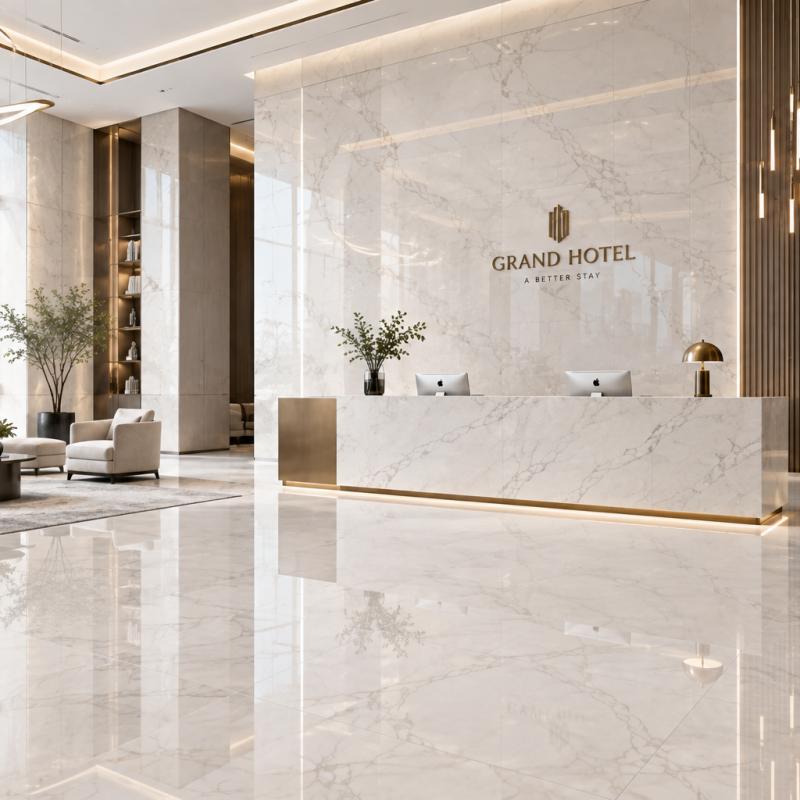
Glossy ceramic tiles have not disappeared as interior design trends have changed. Instead, they have become one option within a broader range of surface finishes.
Their ability to reflect light, emphasize patterns, enhance marble-effect designs, and create a clean visual appearance keeps them relevant in modern interiors.
The growing popularity of matte tiles does not necessarily mean that glossy tiles are becoming outdated. In many projects, the two finishes can work together. Matte surfaces can provide a softer background, while glossy tiles can be used to create highlights, contrast, or feature areas.
For homeowners, designers, wholesalers, and project buyers, the key is to select the finish according to the space, design concept, technical requirements, and target market.
Ultimately, glossy ceramic tile remains a practical and visually versatile choice for modern interior design. From bathroom walls and kitchen backsplashes to large-format feature walls and commercial projects, glossy surfaces continue to have a place in the contemporary tile market.
Yes. Glossy ceramic tiles remain popular for modern bathrooms, kitchens, feature walls, and commercial interiors because they reflect light and create a clean, bright appearance.
Glossy ceramic tiles are commonly used for bathroom walls, kitchen backsplashes, living room feature walls, hotels, restaurants, and other interior spaces.
Yes. Glossy tiles work well with modern, minimalist, contemporary, and marble-look interior designs, especially when combined with matte surfaces for visual contrast.
Yes. 600x1200 glossy ceramic tiles are well suited to large feature walls because their larger format creates fewer grout lines and provides a more continuous visual effect.
Glossy ceramic tiles have smooth surfaces that are generally easy to clean. However, water spots, fingerprints, and streaks may be more visible than on some matte surfaces.









 IPv6 network supported