You choose exterior wall tile for facade for unmatched durability, minimal maintenance, and energy-saving benefits. Paint may appear cheaper upfront. Tiles resist weather, impact, and fading for decades. Tiles win on longevity, thermal performance, and aesthetic resilience. AONAV offers high-performance exterior wall tiles with superior quality and innovative design.
Key Takeaways
Exterior wall tiles last 15–30 years, while paint needs repainting every 2–3 years.
Tiles save energy by keeping buildings cooler in summer and warmer in winter.
Tiles need little maintenance and help earn green building certifications.
Exterior Wall Tile for Facade: Superior Durability and Low Maintenance
You invest in a building facade for the long haul. Paint offers a temporary shield. Exterior wall tile for facade delivers permanent protection. The difference in performance between these two materials becomes obvious within just a few years.
Weather Resistance and Impact Protection
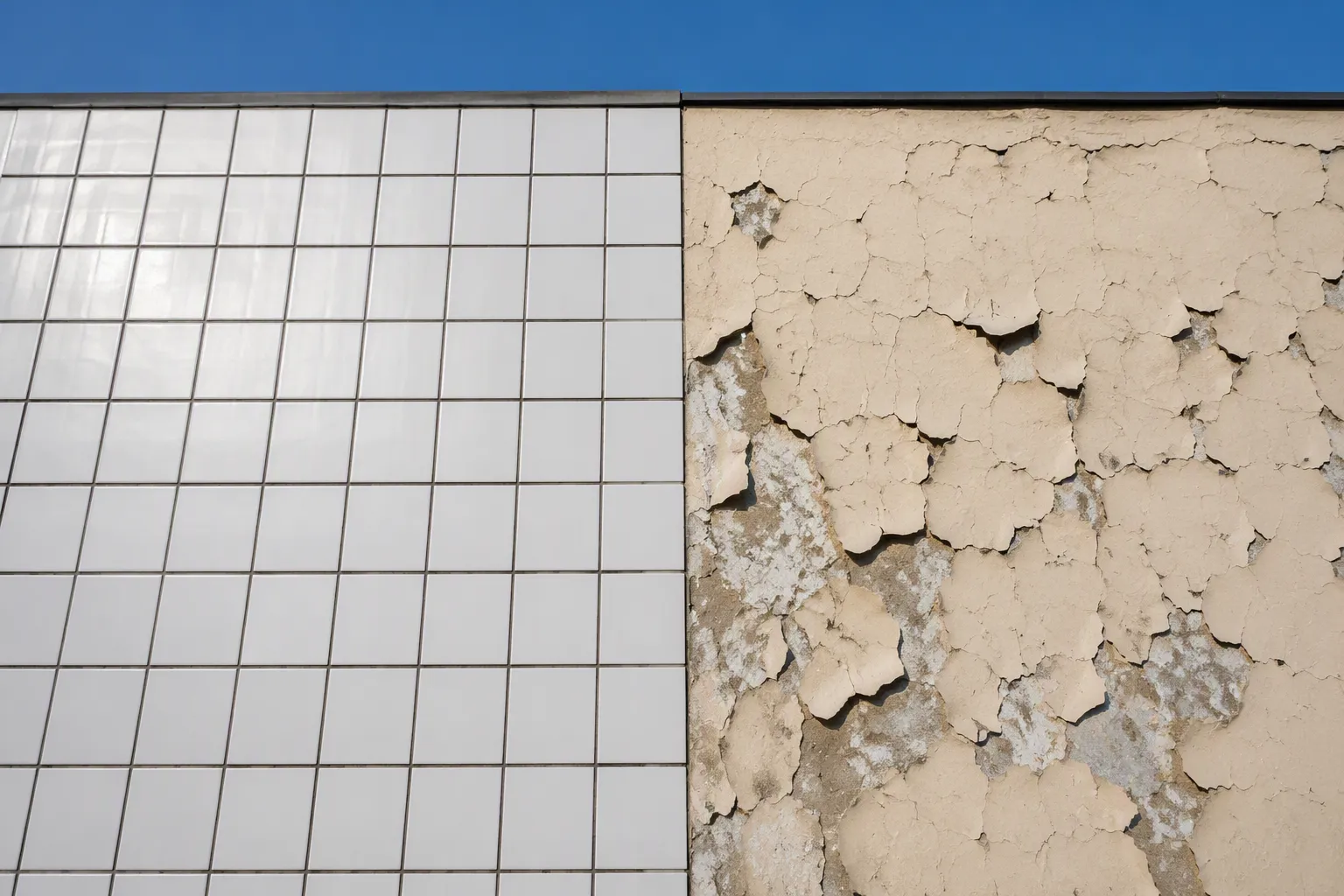
Sun, rain, wind, and temperature swings attack your building every single day. Paint absorbs this punishment and breaks down quickly. You will notice fading, peeling, and chalking within two to three years in most climates. Exterior wall tiles resist these forces at a molecular level. The fired clay surface shrugs off ultraviolet radiation. It repels water instead of absorbing it. It expands and contracts with temperature changes without cracking.
Impact protection separates tiles from paint even further. Hail, flying debris, and accidental contact damage painted surfaces easily. A single impact can chip paint and expose the substrate underneath. Tiles handle these same impacts without structural failure. The dense ceramic body distributes force across the surface. You replace one damaged tile instead of repainting an entire wall section.
The lifespan numbers tell a compelling story. Painted facades typically require repainting every 2–3 years due to fading or peeling. Exterior wall tiles remain vibrant for 10+ years with minimal change. Tiles last at least 7–8 years longer before needing significant maintenance, and often much longer. Exterior wall tiles have a lifespan of 15–30+ years, whereas painted facades last only 5–10 years. This means tiles outlast paint by a minimum of 5 years and up to 25+ years, depending on the specific products and conditions.
AONAV engineers its exterior wall tiles to exceed these baseline expectations. The company uses advanced firing techniques and quality control measures. These processes create tiles with superior density and weather resistance. Your facade stays protected through decades of exposure to the elements.
Minimal Upkeep and Decades of Service
Maintenance demands differ dramatically between paint and tiles. Paint requires you to schedule repainting every few years. You must pay for scaffolding, surface preparation, primer, paint, and labor. Each repainting cycle disrupts building operations and creates waste. Tiles need far less attention over the same period.
Feature
Exterior Paint
Exterior Tiles
Maintenance Frequency
Repaint every 2–3 years (or sooner)
Annual visual checks; grout/sealer maintenance every 2–3 years
Upfront Cost
Lower material cost, but higher lifetime repaint costs
Higher material & labor cost, but lower lifecycle cost
Ease of Repair
Requires full repaint of affected patch
Individual tile replacement keeps repairs discrete
Aesthetic Longevity
Fades/peels after 2–3 monsoons
Remains vibrant for 10+ years with minimal change
This table reveals the true cost picture. Although exterior tiles cost more upfront, they deliver lower lifecycle costs and better ROI over a 10–15 year horizon due to reduced repainting, cleaning, and maintenance.
Cleaning frequency further demonstrates the maintenance advantage. You repaint painted facades every 2–3 years. You inspect exterior wall tile facades annually. You clean them with a scrape or mild detergent wash as needed during those annual checks. You reapply grout or sealer every 2–3 years. These simple tasks keep your facade looking new without the expense and disruption of full repainting.
Facade Type
Maintenance Activity
Frequency
Painted facades
Repainting
Every 2–3 years (or sooner depending on paint quality)
Exterior wall tile facades
Visual inspection
Annually
Exterior wall tile facades
Cleaning (scrape or mild detergent wash)
As needed during annual checks (no fixed cycle)
Exterior wall tile facades
Grout/sealer reapplication
Every 2–3 years
The proper question is not "Which paint is cheaper today?" It is "Which system provides the required protection, appearance and maintainability at the lowest whole-life cost and risk?"
Any serious comparison must publish its assumptions. If the assumptions are hidden, the percentage is marketing rather than analysis.
The seven costs that should be included: initial survey and diagnosis, labour, access, preparation, maintenance, waste, and the condition of the substrate.
AONAV designs its exterior wall tiles for minimal maintenance requirements. The non-porous surface resists dirt accumulation and biological growth. Rain often cleans the surface naturally. You spend less time and money on upkeep with every passing year. Your building maintains its appearance while your maintenance budget stays under control.
Energy Efficiency and Design Versatility
Exterior wall tiles do more than protect your facade. They actively contribute to your building's energy performance. Paint offers no such benefit. You gain a thermal asset that works passively year after year.
Thermal Mass and Ventilated Facade Systems
Tiles possess inherent thermal mass. They absorb heat during the day and release it slowly at night. This natural cycle reduces temperature swings inside your building. Your heating and cooling systems work less hard. You save energy and money each season.
Ventilated facade systems amplify this effect. You install tiles with an air cavity behind them. Air circulates continuously through this gap. In summer, the airflow carries away heat buildup before it reaches your interior walls. In winter, the cavity reduces condensation and heat loss. The system keeps your building envelope dry, stable, and thermally efficient. Paint cannot create this dynamic air barrier.
Color stability plays a direct role in thermal performance. When a facade fades unevenly, it absorbs heat differently across its surface. This creates hot spots and thermal stress. Exterior wall tiles resist this degradation because of their manufacturing process. Mineral-based pigments bond into the clay body at extreme temperatures. The color runs through the entire tile, not just the surface. UV radiation is the most persistent stressor: it breaks down surface pigments over time, causing glazed finishes to fade and unglazed surfaces to shift in tone. Mineral-based pigments fired at high temperatures are significantly more stable under UV exposure than surface-applied colorants, which sit closer to the surface and have less protection.
The following table compares the mechanisms that determine how each material performs over years of sun exposure.
Factor
Exterior Wall Tiles
Exterior Paint
Colorant type & UV stability
Mineral-based pigments fired at high temperatures are far more UV-stable than surface-applied colorants; through-body color resists fading better under prolonged sun.
Surface-applied colorants sit near the surface with less protection, so they break down faster under UV.
Gloss retention
High-gloss glazes stay vibrant initially but are more prone to UV-induced yellowing/fading (especially dark shades); matte/satin glazes scatter light so shifts are less noticeable.
Paint coatings face similar UV fading and temperature-related surface stress.
Unglazed tiles
Color fired into the clay body (>1,000°C) has no glaze layer to crack, fade, or delaminate; weathering forms patina, not damage.
Paint relies on a surface film that degrades and fades over time.
Overall durability driver
The tile body matters more than surface finish for exterior durability.
Paint durability depends on the coating film, which is vulnerable to UV and thermal stress.
You see the pattern clearly. Tiles protect their appearance from the inside out. Paint degrades from the surface inward. This structural difference ensures your facade retains its thermal properties and visual uniformity for decades.
Unlimited Aesthetic Options and Customization
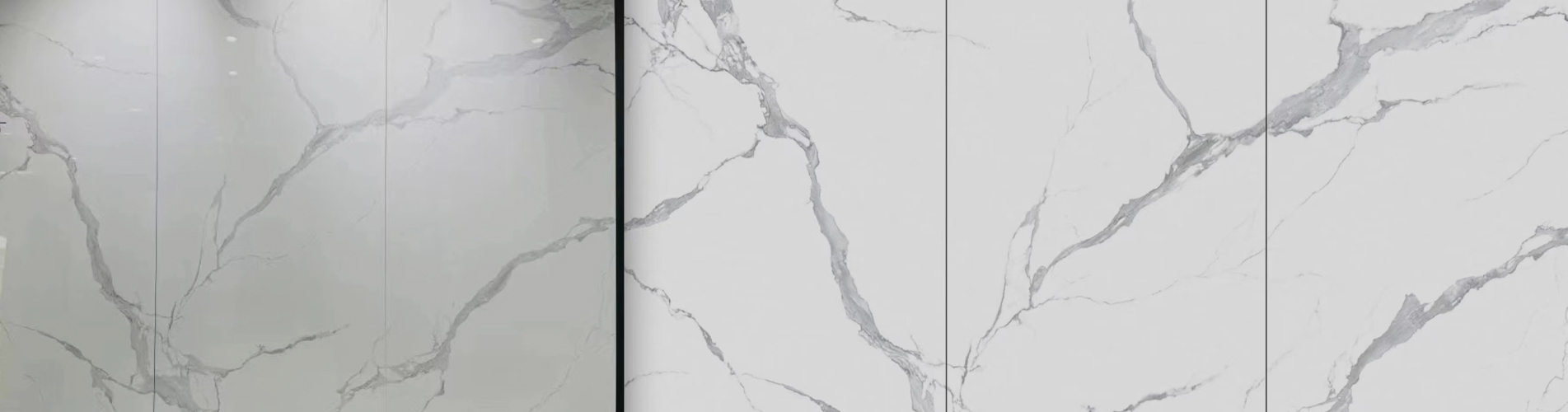
Paint limits you to flat color applied on top of a substrate. You choose from a swatch of hues, but the result remains a thin film. Tiles break through this limitation entirely. You access thousands of colors, textures, sizes, and patterns. You mimic natural stone, wood grain, brickwork, or polished metal. The texture is real, not an optical illusion.
You customize the surface at a physical level. You select matte finishes that scatter light and hide minor imperfections. You choose glazed surfaces for a glossy accent wall. You mix tile sizes to create rhythm and visual interest across the facade. Paint cannot replicate this dimensional depth.
The color palette for tile extends beyond what paint achieves. Mineral pigments remain stable across the visible spectrum. Dark shades stay dark without fading into washed-out tones. Light shades reflect heat consistently. You design a facade that performs as well as it looks.
AONAV offers a complete range of exterior wall tiles designed for maximum aesthetic flexibility. The product line covers natural stone replicates, contemporary smooth finishes, and textured surfaces that catch light differently throughout the day. You achieve any architectural vision without compromising on durability or energy performance. Paint promises variety but delivers uniformity. Tiles deliver true diversity.
Environmental Benefits and Long‑Term Value
Sustainability and Green Building Certifications
You specify materials that contribute to sustainability goals. Choosing exterior wall tile for facade applications supports multiple green building certifications. These tiles earn credits under LEED and BREEAM programs. The key advantage lies in transparency. You obtain Environmental Product Declarations (EPDs) for porcelain tiles. GREENGUARD GOLD certification confirms low chemical emissions. Declare labels and Health Product Declarations (HPDs) provide additional transparency. Paint offers no equivalent documentation for sustainability credits.
Certification
Recognized by LEED
Recognized by BREEAM
Applies to ceramic/porcelain tiles
Notes
Environmental Product Declaration (EPD)
Yes
Yes
Yes
Type III specific EPD for porcelain tile; required by main construction certifying bodies including LEED and BREEAM
GREENGUARD GOLD
Yes
Yes
Yes
All porcelain stoneware and Slimtech collections certified; required by sustainable building programmes such as LEED and BREEAM
Declare
Yes
N/A
Yes
Voluntary tool recognized within LEED credits; ensures transparency on chemical composition of porcelain products
Health Product Declaration (HPD)
Yes
N/A
Yes
Open standard recognized by USGBC LEED; reports health risk information for products
Cost‑Effectiveness Over the Building’s Lifecycle
You evaluate costs over the full building lifespan. Tiles deliver superior financial performance. The initial investment exceeds paint costs. The total cost of ownership favors tiles dramatically. You eliminate recurring repainting expenses. You avoid scaffolding, labor, and disruption costs. One tile installation serves the building for decades. AONAV exterior wall tiles provide this lifecycle advantage with consistent quality. You invest once. You benefit for decades. Less material consumption reduces landfill waste. Fewer maintenance operations lower carbon emissions. You achieve both economic and environmental goals with a single specification.
You gain durability, lower maintenance, energy savings, and environmental benefits when you choose exterior wall tile for facade over paint. Tiles resist harsh weather, need only occasional washing, and keep buildings cooler in summer and warmer in winter. Architects and builders also enjoy design freedom and green building compliance. Explore AONAV's tile options and download the comprehensive guide to see lasting value.
FAQ
How long do exterior wall tiles last compared to paint?
Exterior wall tiles last 15–30 years or more. Paint typically requires repainting every 2–3 years. Tiles provide decades of service.
Can you install exterior wall tiles over existing paint?
You cannot install tiles directly over paint. You must remove or prepare the paint layer first. A stable substrate ensures proper tile adhesion.
Do exterior wall tiles require special cleaning products?
No. You clean most tiles with water and a mild detergent. Harsh chemicals are unnecessary. AONAV tiles resist stains and dirt accumulation naturally.
 Why Exterior Wall Tiles Outperform Paint for Long Lasting Facades









 IPv6 network supported