A reliable ceramic tile manufacturer in China combines verifiable production capability, consistent quality control, clear specification handling, and export experience. To learn how to find tile suppliers China, you should evaluate factory proof—equipment, capacity data, and documented quality systems—not low prices alone. AONAV supports this structured approach with verifiable production data, export-ready packaging, and direct communication.
Key Takeaways
Verify production capability, quality control, and export documents before price talks. This step filters out unreliable suppliers.
Match tile specifications such as water absorption and PEI rating to your project. This choice prevents costly failures.
Protect each order with approved samples, in-process checks, and pre-shipment inspections. This routine secures consistent deliveries.
How to Find Tile Suppliers China: Evaluate Production Capability and Quality Control
When you learn how to find tile suppliers China, the first filter is not price. It is production proof. A factory that cannot show you its equipment list, capacity data, and quality records will struggle to deliver consistent tiles across multiple orders. You need to treat every supplier claim as a hypothesis and every document as a test. This section walks you through four verification steps that separate reliable manufacturers from trading intermediaries.
Verify Product Specifications and Technical Data
Start with the technical data sheet. A professional ceramic tile manufacturer provides a document that lists water absorption, breaking strength, modulus of rupture, PEI rating, and stain resistance for each product line. If the supplier cannot produce a test report referencing ISO 10545-3 or ASTM C373, the "porcelain" or "vitrified" label on the box should be treated as a suggestion, not a fact. This means you should always ask for water absorption test results as part of the technical documentation before you negotiate price.
Water absorption is the single most important specification for classifying tile. ISO 13006 defines porcelain tile as fully vitrified, with water absorption of 0.5% or less by mass, tested under ISO 10545-3. The table below shows how the standard groups ceramic tiles by water absorption and typical use.
Group
Water Absorption
Common Name
Typical Use
BIa
≤ 0.5%
Porcelain / fully vitrified
Bathrooms, kitchens, outdoor, high-moisture areas
BIb
0.5% – 3%
Vitreous
General flooring, balconies, low-moisture zones
BIIa
3% – 6%
Semi-vitreous
Dry indoor floors, moderate traffic
BIIb
6% – 10%
Semi-vitreous (higher)
Dry indoor walls
BIII
Above 10%
Non-vitreous
Dry wall cladding only, never wet areas
A true porcelain tile also delivers a set of mechanical properties that you should confirm on the data sheet. These include near-zero apparent porosity, high mechanical strength with a minimum modulus of rupture around 35 N/mm² per EN ISO 10545-4, strong abrasion resistance with deep abrasion capped at 175 mm³ under EN ISO 10545-6, and frost resistance verified through freeze-thaw testing per ISO 10545-12. When a supplier lists these values, you have a baseline for comparison. When a supplier omits them, you have a reason to ask harder questions.
Breaking strength and modulus of rupture appear in different units depending on the standard. You will see values in psi, newtons, N/mm², lbf, kN, or MPa. The table below summarizes how these measures are typically listed.
Measure
Unit
Context
Breaking strength
psi (pounds per square inch)
English units
Breaking strength
N (newtons)
Force; sometimes listed as S ≥ 1300 or 2000 N
Modulus of rupture
N/mm²
Listed as R ≥ 40 N/mm²; can be converted to psi (145 psi per 1 N/mm²)
Breaking strength
lbf (pounds-force) or kN
ANSI A137.1: 250 lbf (1.11 kN) for pressed floor tiles; 275 lbf (1.22 kN) for porcelain
Modulus of rupture
psi or MPa
ANSI A137.3-2022: 6,000 psi (41 MPa) for gauged porcelain tiles/panels
On a well-structured product page, both values appear in the performance table alongside the PEI rating and stain class, citing ISO 10545-4. You should expect the same level of detail from any supplier you shortlist. AONAV provides documented specifications for each product line, which allows you to compare technical data across batches without guesswork.
Audit Production Capacity and Factory Equipment
Production capacity tells you whether a factory can handle your order volume and repeat it. Ask for the number of kilns, the pressing tonnage, the glazing line configuration, and the monthly output in square meters. A factory with modern equipment and stable output can commit to delivery schedules. A factory that outsources production to multiple workshops will struggle with color consistency and lead time.
You should request a video walkthrough or an in-person audit of the production floor. Look for continuous kilns, automatic presses, and digital printing lines. These features indicate a factory that invests in quality control. Older equipment is not automatically disqualifying, but it requires more frequent inspection and tighter process controls.
Capacity data also helps you plan your order. If a factory produces 200,000 square meters per month and you need 20,000 square meters, you have room to negotiate. If your order represents most of their monthly output, you carry more risk. A balanced order book signals a healthy factory.
Confirm International Standards and Certifications
Certifications provide third-party evidence that a factory meets recognized standards. Look for ISO 9001 for quality management, ISO 14001 for environmental management, and product certifications such as CE marking for the European market or ANSI compliance for the United States. These documents do not guarantee perfect tiles, but they show that the factory operates a documented quality system.
You should verify each certificate directly with the issuing body. Some suppliers present expired or altered certificates. A quick check on the certification body's website confirms the factory name, scope, and validity period. This step takes minutes and protects you from costly mistakes.
Product-specific test reports matter as much as management certifications. Ask for reports on water absorption, breaking strength, frost resistance, and slip resistance. These reports should reference the test method and the date of testing. A report older than two years may not reflect current production.
Check Direct Communication and Export Experience
Communication speed and clarity predict how smoothly your order will proceed. A sourcing service for Chinese ceramic tiles gives a fast-response commitment of 24 hours for quote requests. You should test this commitment before you place an order. Send a detailed inquiry with specific questions about specifications, packaging, and lead time. Measure how long the supplier takes to respond and whether the answer addresses your questions directly.
Verified Chinese ceramic tile exporters show a clear pattern in response times. Among listed suppliers, the majority maintain ≤2h average response times, and top performers with high on-time delivery (98–100%) cluster at ≤1–3h. The table below shows the distribution.
Response-time benchmark
Listed suppliers
Reliability signal
≤1h
1
100% on-time delivery, 5.0 rating
≤2h
5
On-time delivery 77.8–100%, mostly 4.7+ ratings
≤3h
2
On-time delivery 94.1–99.5%, 4.8/5.0 rating
≤5h
2
On-time delivery 94.1–96.4%, 5.0/5.0 for one
A manufacturer comparison shows a similar pattern. Most verified suppliers communicate within ≤2h, with widely high on-time delivery. The table below shows the distribution across ten manufacturers.
Response-time benchmark
Listed manufacturers
Reliability signal
≤2h
6 of 10
On-time delivery 89.5–100%
≤3h
1 of 10
5.0 rating and 89.5% on-time
≤4h
1 of 10
100% on-time, 5.0 rating
≤5h
2 of 10
100% on-time, 4.9–5.0 ratings
Export experience requires documentary proof. You should request past bills of lading that match the supplier's claimed export destinations and shipment volumes, ideally for the past 12–18 months. Confirm that the destination market, shipment volume, and product type shown on the B/L align with the supplier's declared experience. Use high project-volume claims as a reason to request documentation, not as a trust signal. Treat hesitation, internal shipping records, or customer reference letters instead of freight documents as a red flag.
Payment terms also reveal export experience. Standard safe terms are 30% deposit and 70% against a copy of the Bill of Lading. Avoid 100% upfront payment. Full payment before production is a major scam signal. Since both factories and trading companies pay the same factory, a trading company cannot offer better B/L-based payment terms than the factory gives them. When you know how to find tile suppliers China with these checks, you reduce your exposure to fraud and delays.
AONAV supports direct communication with buyers and provides export documentation on request. This approach helps you verify claims before you commit to a purchase order.
Choose the Right Tile, Customization Plan, and Supply Security
Select Tiles by Application: Porcelain vs. Ceramic
Your application determines the tile body you need. Under ANSI A137.1, porcelain is defined as impervious tile with water absorption of 0.5% or less. Ceramic tile falls into vitreous (0.5% to 3%), semi-vitreous (3% to 7%), or non-vitreous (above 7%) categories. Porcelain suits malls, hotels, airports, hospitals, and wet residential areas. Ceramic works well for interior walls, backsplashes, and light-traffic commercial spaces. AONAV provides documented absorption data so you can match the right body to each project.
Compare Surface Finishes, Slip Resistance, and PEI Rating
Surface finish affects both safety and durability. For bathroom floors outside showers, European standards recommend R10–R11, while North American projects require a wet DCOF of 0.42 or higher. PEI ratings grade wear resistance: PEI 4 handles moderate-to-heavy commercial traffic such as hotel lobbies and restaurants, while PEI 5 serves airports, shopping malls, and industrial settings. Request test reports for every finish you specify.
Confirm Colors, Patterns, and Product Continuity
Shade variation between production batches can ruin an installation. Manufacturers track batch numbers, shade codes, and calibre to control consistency. Digital inkjet printing achieves batch-to-batch color repeatability exceeding 99.3%, with spectrophotometer checks flagging any deviation beyond ΔE 0.8. Always confirm that every carton shares the same lot and shade code before shipment.
Set MOQs, Customization Costs, and Packaging at Quotation
Chinese factories typically require container-based orders rather than fixed unit minimums. Stock sizes may start from 100 m², while custom colors or rectified edges often require 500 m² or more. Pattern complexity and design difficulty drive customization pricing. Existing mold modification can reduce costs and shorten delivery to seven days. Discuss packaging specifications at quotation so your price reflects the real cost.
Lock Quality with Samples, In-Process Checks, and Pre-Shipment Inspection
Approve a physical sample before mass production begins. Your sample board should confirm classification, shade range, size tolerance, and packing markings. Request a water absorption test report matching the quoted grade. During production, verify in-process checks for color consistency and dimensional accuracy. Before shipment, conduct a pre-shipment inspection to catch defects, shade drift, or labeling errors.
Plan Export Packaging, Container Loading, and Lead Times
Export packaging protects your investment across ocean transit. Corner protectors, high burst-strength cartons, fumigated pallets, and moisture-absorbing desiccant bags reduce breakage risk. Container loading should distribute weight evenly, use dunnage bags to prevent shifting, and place heavy pallets at the base. An acceptable loss rate stays under 3%. Confirm lead times in writing before you commit.
Build a Long-Term Sourcing Partnership
Reliable supply chains grow through continuous evaluation. Track sample accuracy, communication speed, factory capability, and export handling across every order. AONAV supports this approach with documented specifications and consistent batch control, helping you build a sourcing relationship that delivers predictable results.
Reliable sourcing starts with verifying factory capability, quality control, and export experience before you discuss price. Use written specifications, approved samples, in-process checks, and pre-shipment inspections to reduce risk on every order. Discuss MOQs, customization costs, packaging, and lead times early. When you learn how to find tile suppliers China, build a pre-export checklist that freezes specifications, decomposes quotes, and schedules inspections before shipment. AONAV supports this approach with documented specifications and consistent batch control.
FAQ
How do I verify a ceramic tile manufacturer's production capability?
Request kiln counts, pressing tonnage, and monthly output directly. Ask for a factory walkthrough video. Compare those numbers against your order size.
What specifications should I confirm before approving tile samples?
Confirm water absorption, breaking strength, PEI rating, and surface finish. Match them against your project's environment and traffic. Request the test report alongside each sample.
How do I protect my order from defects and shipping delays?
Lock down written specifications, approve physical samples, schedule in-process checks, and run a pre-shipment inspection before loading. AONAV provides documented data for these checks.
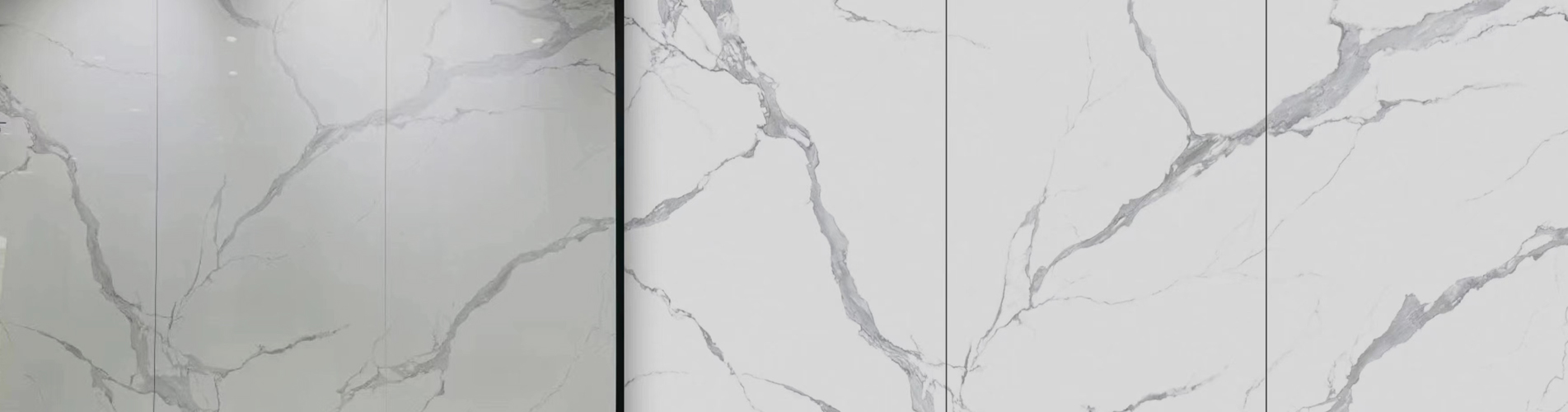
 How to Choose a Reliable Ceramic Tile Manufacturer in China









 IPv6 network supported