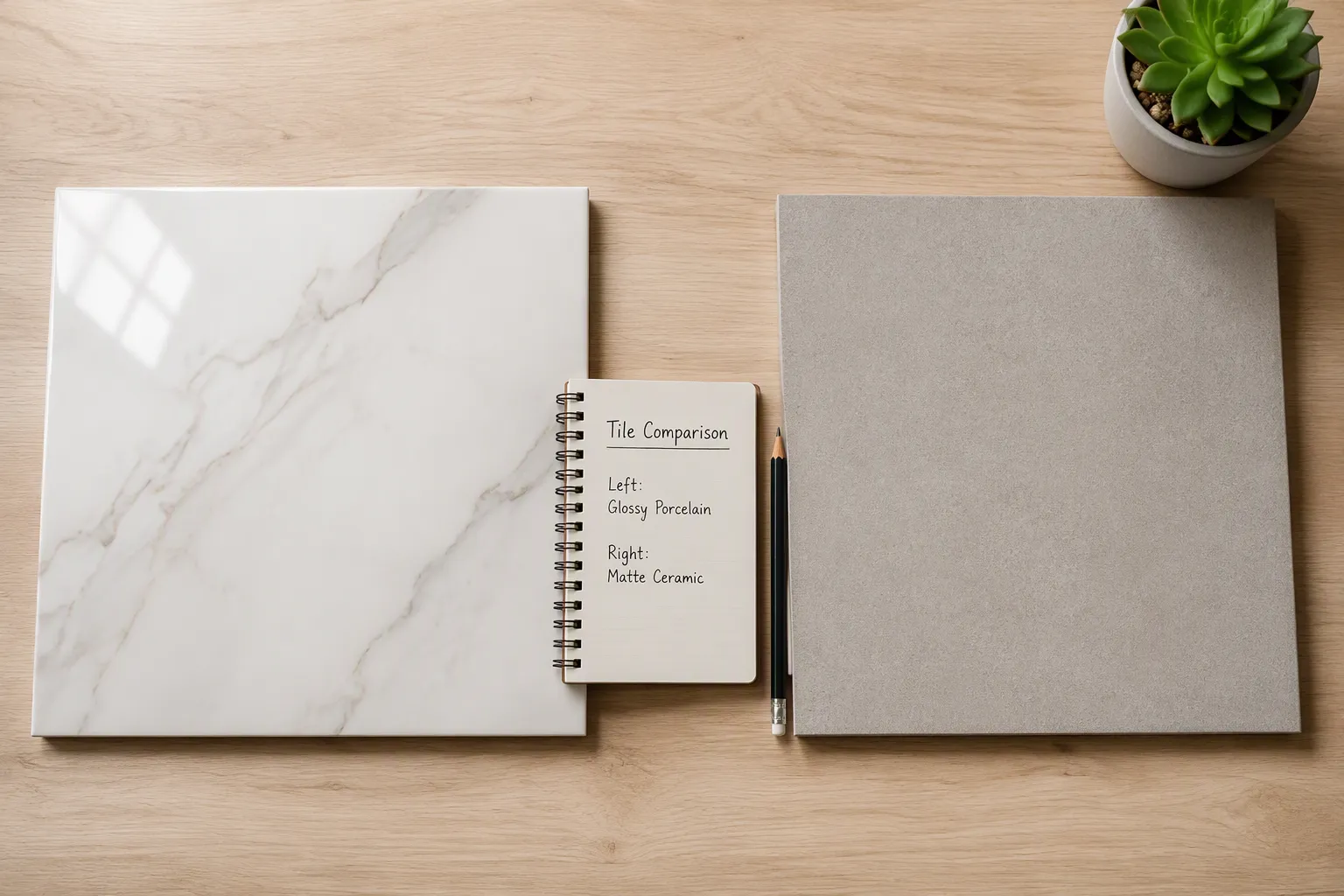
Neither tile is universally better. Your project's needs decide the winner. Porcelain wins on durability and moisture resistance. Ceramic wins on budget and ease of installation. This porcelain vs ceramic tile comparison breaks down five deciding factors: durability, water resistance, installation, cost, and maintenance.
Key Takeaways
Porcelain tile wins on durability and water resistance. It lasts longer in wet, high-traffic, and outdoor areas.
Ceramic tile costs less and is easier to install. It works well for indoor walls and low-traffic floors.
Match the tile to your project's needs. Consider traffic, moisture, and budget before you choose.
Porcelain vs Ceramic Tile: The Core Difference
You can trace the porcelain vs ceramic tile distinction back to the raw materials and the kiln. Both tiles start as clay, sand, and minerals. The recipe and the firing temperature separate them.
What Ceramic Tile Is Made Of
Ceramic tile uses red or white clay, mixed with sand and other natural minerals. Manufacturers shape the tile and fire it at roughly 1,800 to 2,200°F. This process produces a durable surface for walls and light-traffic floors. The body stays somewhat porous after firing.
What Porcelain Tile Is Made Of
Porcelain tile blends finer clays with feldspar, quartz, and silica. Manufacturers fire it at higher temperatures, typically 2,300 to 2,500°F. The denser mix and intense heat fuse the particles tightly. The TCNA defines porcelain as an impervious tile with water absorption of 0.5% or less, measured by the ASTM C373 test method. Under ANSI A137.1, only tiles at or below that 0.5% threshold qualify as porcelain and can earn Porcelain Tile Certification Agency (PTCA) certification.
Why Firing Temperature Changes Everything
Higher heat drives out more moisture and closes the tile body. The result is a denser, harder product with very low porosity. The table below shows how density categories map to water absorption.
Density Category
Water Absorption Rate (WA)
Low Dense
more than 7%
Medium Dense
between 3% and 7%
High Dense
between 0.5% and 3%
Extremely Dense (porcelain)
0.5% or less
This density gap shapes every practical difference between the two tiles, from strength to stain resistance.
Durability: Which Tile Holds Up Better?
Durability separates these two materials more than any other factor. You will notice the gap in busy entryways, commercial kitchens, and any floor that takes a daily beating. The porcelain vs ceramic tile debate usually starts here, and the data favors one side.
Strength and Density Compared
Porcelain wins the strength contest. Its finer clay body and higher firing temperature create a denser tile with fewer internal voids. Those voids act like weak points in ceramic tile. A denser body resists impact, flexing, and heavy loads far better.
The PEI (Porcelain Enamel Institute) rating gives you a practical way to compare surface wear. This scale runs from Class 0 to Class 5 and measures how well a glazed surface resists abrasion.
PEI Class
Wear Resistance
Typical Use
Class 0
No foot traffic
Wall tile only
Class 1
Very light
Residential bathrooms
Class 2
Light
Residential interiors
Class 3
Moderate to heavy
All residential, light commercial
Class 4
Heavy
Commercial, high-traffic areas
Class 5
Extra heavy
Malls, airports, industrial floors
Most porcelain tiles land in Class 4 or Class 5. Many ceramic tiles sit in Class 1 through Class 3. You can install a Class 3 ceramic tile in a hallway and expect decent service. You cannot expect that same tile to survive a retail entrance with carts rolling over it every hour.
Breaking strength tells a similar story. Porcelain typically handles more than 300 pounds per square inch (psi) of breaking load. Standard ceramic often falls below 250 psi. That margin matters when a heavy appliance lands on the floor or furniture legs concentrate weight on a small point.
Density also affects how the tile handles temperature swings. A tight, low-porosity body expands and contracts less. Ceramic tile moves more with heat and cold. Over years, that movement stresses the bond between tile and substrate.
Chips, Cracks, and Lifespan
Chipping and cracking depend on both the tile body and the glaze. Porcelain's dense body absorbs impact energy across a wider area. A dropped tool often leaves a small mark or nothing at all. The same impact on ceramic tile can chip the glaze or crack the body outright.
Glaze quality matters too. A thick, well-fired glaze protects the surface from scratches and stains. Cheap ceramic tile sometimes carries a thin glaze that wears through in high-traffic zones. Once the glaze fails, the porous body underneath stains quickly and looks worn.
Lifespan follows directly from these properties. A well-installed porcelain floor routinely lasts 50 years or more. Ceramic tile in a low-traffic room can last decades as well. Ceramic in a busy kitchen or mudroom often shows wear within 10 to 15 years. You replace it sooner, and that replacement cost erases the savings from the lower purchase price.
Installation quality changes everything here. A poor substrate, thin mortar coverage, or missing expansion joints will crack even the toughest porcelain. Proper installation protects your investment regardless of which tile you choose.
Outdoor conditions test durability hardest. Freeze-thaw cycles, direct sun, and rain punish weak tile bodies. Porcelain's low absorption lets it survive these cycles. Ceramic tile absorbs water, and that water expands when it freezes. The expansion cracks the tile from the inside. You should keep standard ceramic tile indoors and away from freezing conditions.
Water Resistance: The Bathroom and Kitchen Factor
Water decides many tile failures. Bathrooms, kitchens, laundry rooms, and entryways all expose flooring to spills, steam, and standing moisture. This is where the porcelain vs ceramic tile comparison becomes practical rather than academic.
Porcelain's Low Porosity Explained
Porcelain clay fuses into a tight, glass-like body during firing. That density leaves almost no room for water to enter. According to ANSI A137.1, porcelain tile is classified as impervious tile, which is defined as having a water absorption rate of 0.5% or less. Manufacturers measure this rate with the ASTM C373 test.
Class
Water Absorption Rate
Impervious (includes porcelain)
0.5% or less
Vitreous
above 0.5% through 3%
Semi-vitreous
above 3% through 7%
Non-vitreous
above 7%
You can install impervious tile in a shower floor or a busy kitchen without worrying about water soaking into the body.
Where Ceramic Tile Falls Short with Moisture
Ceramic tile sits in the semi-vitreous or non-vitreous range. Water slowly enters the porous body through the grout lines and the tile edges. Over time, that trapped moisture feeds mold and weakens the bond between tile and substrate. A cracked glaze makes the problem worse, because water then reaches the clay directly.
Frost Resistance for Outdoor Use
Freeze-thaw cycles destroy waterlogged tile. Water enters the body, expands as it freezes, and cracks the tile from within. Porcelain's low absorption lets it survive winter weather on patios and walkways. Keep standard ceramic tile indoors and away from freezing conditions.
Installation: What to Expect
Installation demands differ between the two tiles. Porcelain's density makes it harder to cut and heavier to handle. Ceramic tile cuts easily and weighs less. Plan your tools and your labor before you start.
Cutting and Handling Differences
Porcelain tile is dense and hard. Standard scoring tools struggle with it. You need diamond blades and more patience. Ceramic tile scores and snaps with basic tools. The table below shows which blade suits each material.
Blade
Best for
Notes
SPT Diamond Blade (segmented)
2cm porcelain tiles
Designed for cutting 2cm porcelain
CEV Continuous Rim Diamond Blade
Ceramic tiles
Ideal for ceramic; works on wall and floor tiles
TVH Turbo Viper Diamond Blade
Granite, rustic tiles, slate, porcelain
Best for hard materials
TPI Mitre Turbo Diamond Blade
Mitre cuts
New product for mitre cuts
You can also use a tile nipper for small cuts, an angle grinder for circles and L-cuts, or a tile cutter for fast, accurate straight cuts. A wet saw handles large porcelain jobs.
Porcelain also weighs more per square foot. You will need a helper for large-format pieces.
DIY vs Professional Installation
Ceramic tile suits confident DIYers. The material forgives small errors, and rental cutters handle it well. Porcelain rewards professional installation. Its density punishes weak mortar coverage and poor substrate prep. A pro ensures proper coverage, expansion joints, and flatness. That investment protects a floor built to last decades.
Cost: Breaking Down the Price Gap
Price often decides the porcelain vs ceramic tile question before any other factor enters the conversation. You pay less up front for ceramic. You pay more for porcelain. The gap looks simple on a quote sheet, yet the full picture involves more than the sticker price.
Material Cost per Square Foot
Ceramic tile carries a lower material cost. According to Yelp's cost guide, the average material-only cost for ceramic tile flooring in the United States is $0.50–$35 per square foot. TaskRabbit estimates a narrower material range of $1–$5 per square foot.
Source
Material Cost per Sq Ft (Ceramic Tile)
Scope
Yelp
$0.50–$35
Materials only
TaskRabbit
$1–$5
Estimated material cost
Porcelain typically runs higher per square foot. The finer clay blend and the higher firing temperature raise production costs. You absorb that premium at purchase.
Long-Term Value Considerations
Look past the initial invoice. Porcelain's density resists chips, moisture, and wear, so you replace it far less often. A floor that lasts 50 years spreads its cost across decades of service. Ceramic in a busy room may need replacement within 10 to 15 years, and that second purchase erases your savings. AONAV porcelain tile delivers this long-term value through denser clay and precise firing control. Factor in installation labor, removal costs, and disruption, and the cheaper tile often costs more over time.
Maintenance and Everyday Care
Daily care for both tiles is simple. A damp mop and a mild cleaner handle most messes. The real differences show up in sealing schedules and long-term stain resistance.
Cleaning and Sealing Needs
Porcelain is a type of ceramic tile with water absorption of 0.5% or less. The dense body resists stains on its own. Glazed porcelain adds a glass-like coating that pushes stain resistance even further. That leaves mainly the grout as a weak point.
Cementitious grout is porous and prone to staining.
Sealers typically need reapplication every 6 months to a year, depending on conditions.
Porcelain and ceramic tiles often need no sealing at all, or only their grout lines need periodic sealing.
You will find no major sealing frequency gap between the two materials. Both tiles stay low-maintenance when you protect the grout.
Stain and Scratch Resistance
Porcelain's tight body blocks liquids from soaking in. Spills wipe up cleanly, even after they sit for a while. Its hard surface also shrugs off scratches from daily foot traffic and furniture. AONAV porcelain tile pairs this density with a durable glaze, so the surface keeps its finish through years of use.
Ceramic tile resists stains well when the glaze stays intact. A chip or worn glaze exposes the porous body underneath. That exposed clay absorbs spills and holds them. Keep an eye on high-traffic zones and replace damaged tiles early. Regular sweeping removes grit that dulls either surface over time.
Best Use Cases for Each Tile
Matching the tile to the room prevents costly mistakes. A tile that performs well in one space may fail in another. Use the guidance below to place each material where it delivers the best results.
Where Ceramic Tile Shines
Ceramic tile works best in dry, low-traffic areas where its lower density causes no problems. Industry surveys show a consistent pattern in residential projects. Homeowners choose ceramic tile most often for these applications:
Kitchens
Bathrooms
Living spaces
Outdoor residential areas
The survey data goes deeper than room labels. Ceramic tile appears frequently on floors and walls. You also find it on shower walls, fireplace surrounds, countertops, and pool walls. Outdoor living spaces represent a growing segment for ceramic installations. Exterior wallcoverings and building cladding round out the list.
These applications share one trait: they demand visual appeal and easy cleaning more than extreme strength. A ceramic backsplash in a kitchen handles splashes and wipes clean in seconds. A ceramic wall in a bathroom delivers a smooth, water-friendly surface at a low price. Living spaces benefit from the wide range of colors, patterns, and finishes that ceramic manufacturers offer.
Ceramic tile also suits projects with tight budgets. You can tile a large living room or a full kitchen backsplash without stretching your finances. The material cuts easily, so DIY installation stays within reach for confident homeowners. Rental properties and quick renovation projects benefit from ceramic's lower cost and simpler handling.
Wall applications favor ceramic for another reason. Walls carry no foot traffic and no heavy loads. The tile's lower breaking strength never becomes an issue. You get a durable, attractive surface at the lowest possible price point.
Keep ceramic away from freezing outdoor conditions and heavy commercial floors. Inside those limits, ceramic tile delivers reliable performance and strong value.
Where Porcelain Tile Wins
Porcelain tile takes the lead wherever moisture, traffic, or temperature swings test the material. Its low porosity and high density make it the safer choice in demanding environments. The porcelain vs ceramic tile decision becomes clear in the spaces below.
High-traffic floors belong to porcelain. Entryways, mudrooms, and busy family kitchens see constant foot traffic and dropped objects. Porcelain's PEI Class 4 or Class 5 rating resists surface wear through years of daily use. A ceramic floor in the same spot would show scratches and worn glaze far sooner.
Wet areas reward porcelain's impervious body. Shower floors, bathroom floors, and laundry rooms expose tile to standing water and steam. Porcelain absorbs almost nothing, so moisture stays on the surface and drains away. You avoid the mold, mildew, and substrate damage that plague porous tile in wet rooms.
Outdoor spaces demand porcelain's frost resistance. Patios, walkways, pool decks, and driveways face rain, sun, and freeze-thaw cycles. Porcelain survives these conditions because water cannot enter its dense body. Standard ceramic tile cracks under the same exposure.
Commercial and institutional spaces also favor porcelain. Retail stores, restaurants, offices, and airports need floors that handle heavy loads and constant cleaning. Porcelain's breaking strength and abrasion resistance meet those demands. The table below summarizes the best use cases for each material.
Environment
Ceramic Tile
Porcelain Tile
Low-traffic indoor floors
Best fit
Works well
Kitchen backsplash
Best fit
Works well
Bathroom walls
Best fit
Works well
High-traffic floors
Not recommended
Best fit
Shower floors
Not recommended
Best fit
Outdoor patios and walkways
Not recommended
Best fit
Commercial spaces
Limited use
Best fit
Freezing climates
Not recommended
Best fit
Radiant heated floors also favor porcelain. The dense body conducts and holds heat evenly. Its low expansion under temperature changes keeps the tile stable across heating cycles. Ceramic moves more with heat, and that movement stresses the bond to the substrate over time.
Large-format tiles work better in porcelain as well. Manufacturers produce porcelain slabs in sizes that ceramic cannot match. These slabs create seamless floors and walls with fewer grout lines. Fewer grout lines mean less maintenance and a cleaner visual result.
Choose porcelain when the project demands longevity under hard conditions. The higher purchase price buys decades of reliable service in the toughest spaces.
Why AONAV Porcelain Tile Stands Out
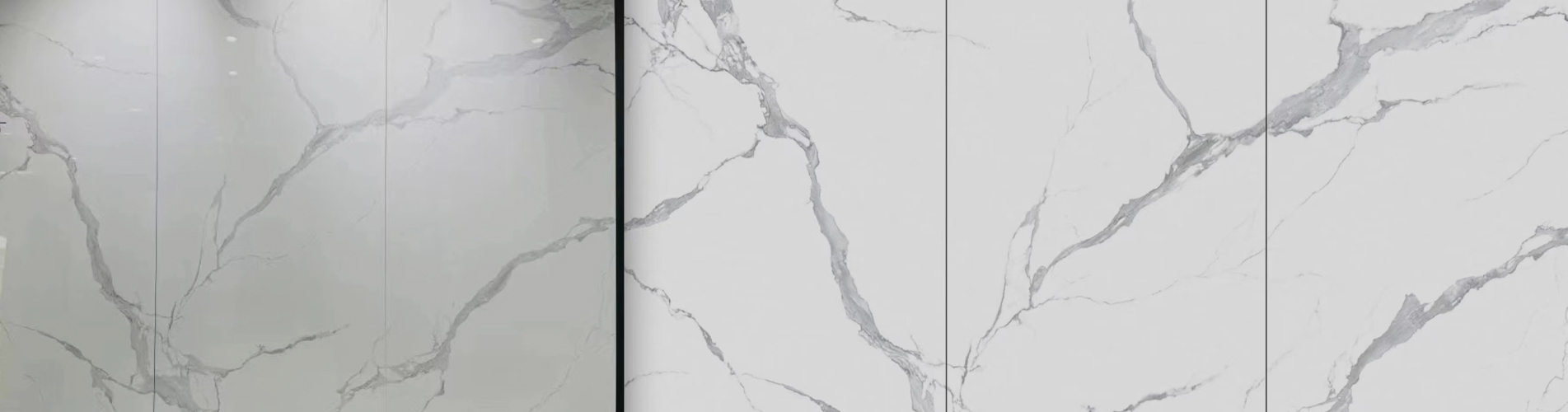
AONAV porcelain tile combines the raw material quality and firing precision that define top-tier porcelain. You get a tile engineered for demanding projects, not just basic coverage.
Denser Clay, Higher Firing, Stronger Results
AONAV selects fine clays and fires them at high temperatures. This process creates a tight, dense body with minimal internal voids. The result is a tile that resists impact, flexing, and heavy loads far better than standard porcelain.
Water absorption tells the clearest story. AONAV polished ceramic tile carries a water absorption rate below 0.5%, placing it firmly in the impervious category.
Attribute
Value
Source
Water Absorption Rate
<0.5% (approximately 0.5%)
AONAV (Aonav Ceramic) polished ceramic tile product listing
This low porosity means water stays on the surface. You avoid the moisture penetration that weakens lesser tiles over time.
Built for Wet and High-Traffic Spaces
AONAV porcelain tile handles the toughest environments. Its PEI rating confirms the surface durability.
Porcelain tile carries a PEI Class 5 wear rating for heavy foot traffic, indicating it has passed the highest level of standardized abrasion testing.
You can specify AONAV for commercial entrances, busy kitchens, and shower floors with confidence. The tile also delivers strong value against competing porcelain brands.
Brand / Supplier
Price
Unit
Fuzhou Aonav Trade Co., Ltd.
$3–4
per square meter
Foshan Hilite Ceramics Co., Ltd.
$0.54–0.61
per sq ft
Shenzhen Sunnda Industry Limited
$4–7
per square meter
Foshan Yaohui Building Materials Co.
$12.80–19.80
per sq meter
Foshan Guci Industry Co., Ltd.
$8.20–12.60
per sq meter
AONAV quotes per square meter at roughly $0.28–0.37 per square foot. That price sits well below most competitors in the comparison set. You get premium density and wear resistance without the premium markup.
In this porcelain vs ceramic tile decision, the better tile matches your project, not the higher price tag. Choose ceramic ($8–$16 per square foot installed) for budget-friendly, low-traffic indoor walls. Choose porcelain for high-traffic, wet, or outdoor areas. Weigh traffic, moisture, and budget, then consider AONAV porcelain for durability and low porosity. Measure your space, add 10% for waste, set a budget, and pick the tile that fits both.
FAQ
How Can You Tell Porcelain Tile from Ceramic Tile?
Check the water absorption rate. Porcelain absorbs 0.5% or less. Ceramic absorbs more. You can also compare density, weight, and the manufacturer's PTCA certification label.
Is Porcelain Tile Worth the Extra Cost?
Yes, for demanding spaces. Porcelain lasts longer in wet, high-traffic, and outdoor areas. You avoid replacement costs. Ceramic saves money in dry, low-traffic rooms.
Which Tile Works Best for Bathrooms?
Porcelain wins for shower floors and wet zones. Its low porosity blocks moisture penetration. Ceramic suits bathroom walls and low-splash areas on a tighter budget.
 Porcelain Tile vs Ceramic Tile: Which One Is Better for Your Project?









 IPv6 network supported