You can cut material costs by 30–50% when you import tiles from China instead of buying at U.S. retail prices. China produces more than half of the world's ceramic tiles. This volume gives you unmatched choice in style, size, and finish. A structured plan separates a profitable import from a costly mistake. You can avoid quality failures, payment fraud, and customs delays with the right preparation. Smart buyers who import tiles from China treat every step as a risk checkpoint.
You can cut material costs by 30–50% when you import tiles from China.
A structured plan helps you avoid quality failures, payment fraud, and customs delays.
Treat every step as a risk checkpoint to ensure a profitable import.
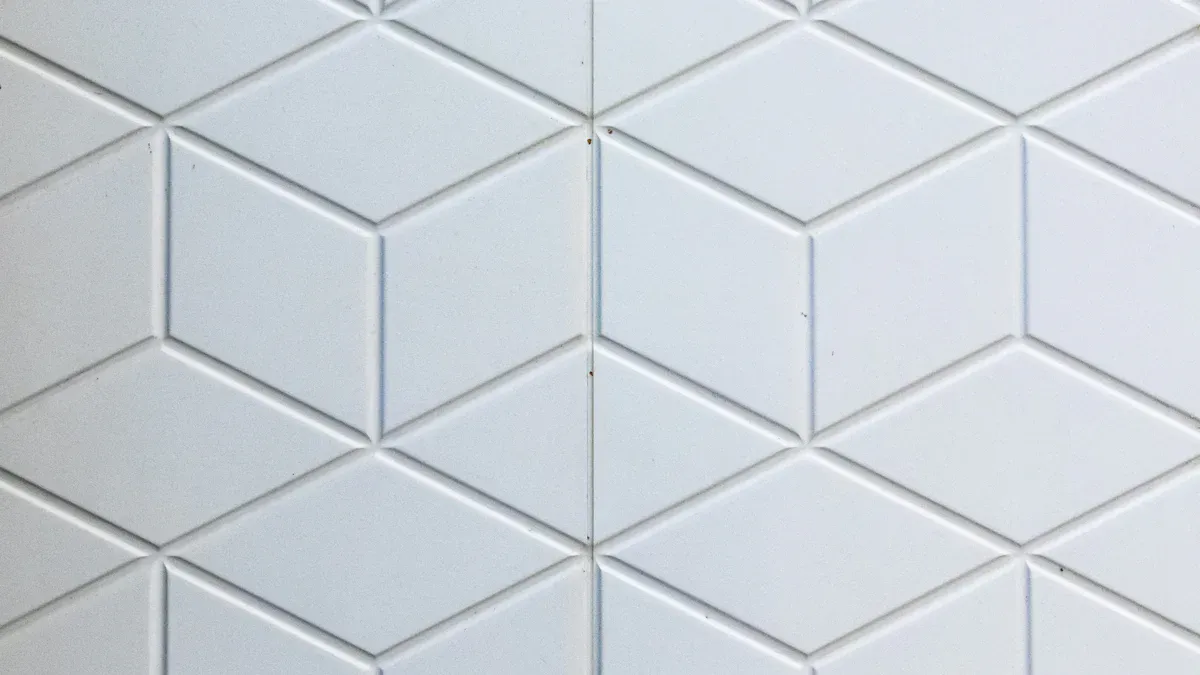
You face one core decision before you request any quote: porcelain or ceramic. The two differ mainly in density and water absorption, and that difference drives where each tile performs best.
|
Attribute |
Porcelain Tile |
Ceramic Tile |
|---|---|---|
|
Water absorption rate |
Below 0.5% (vitrified, nearly impervious) |
3%–7% (more porous) |
|
Moisture suitability |
Bathrooms, kitchens, laundry rooms, outdoor patios; resists mold and mildew beneath the surface |
Less suitable for exterior or constantly wet areas; performs well indoors with sealing and care |
|
Hardness and durability |
Harder; PEI rating often 4–5; resists chips, scratches, and stains |
Softer; more prone to chipping, especially at the edges; glaze can wear in high-traffic areas |
|
Best use |
High-traffic, moisture-prone, commercial, and outdoor applications |
Indoor walls and floors, guest baths, bedrooms, decorative applications |
For a tile to be considered porcelain, the water absorption rate must be less than 0.5% under ASTM testing standards. This low absorption directly affects durability, freeze-thaw resistance, stain resistance, and moisture protection.
Porcelain absorbs far less water than ceramic, so it holds a clear edge in break strength over time. Ceramic remains an affordable option for lighter-duty indoor spaces. Choose porcelain when durability is the priority.
Glazed tiles carry a protective top layer that adds stain resistance and color depth. Polished tiles offer a mirror-like sheen for formal interiors, though they can show scratches and become slippery when wet. Matte finishes hide smudges and footprints well, which makes them a practical pick for floors in busy homes and commercial entries.
Chinese factories produce tiles from small mosaics up to large-format slabs of 24×48 inches and beyond. Standard 12×24-inch formats suit walls and floors, while 24×24-inch tiles reduce grout lines in open living areas. Large-format slabs work well for seamless commercial floors. Match each size to its application before you finalize specifications.
You should know where China makes its tiles before you search for a supplier. Guangdong, Hebei, and Fujian are the main ceramic-exporting provinces. Together they account for roughly 80% of China's ceramic exports.
|
City |
Province |
Notable Characteristic |
|---|---|---|
|
Chaozhou |
Guangdong |
Major ceramic industry location |
|
Foshan |
Guangdong |
Largest building and sanitary ceramics production base |
|
Tangshan |
Hebei |
One of China's five major ceramic areas |
|
Zibo |
Shandong |
About 54% of provincial output |
|
Jingdezhen |
Jiangxi |
China's most famous porcelain base |
|
Liling |
Hunan |
Major export base with 400+ enterprises |
|
Dehua |
Fujian |
Largest Western porcelain production base |
Foshan deserves special attention. About 350 tile makers there produce 1.2 billion square meters annually. Over the past decade, Foshan accounted for 54% of China's ceramic tile production and 25% of worldwide output. Eight of the 10 nationally designated "China Famous Brands" tile makers operate in Foshan.
Online platforms give you fast access to thousands of suppliers. Each platform serves a different buyer profile.
|
Platform |
Best For |
Key Cross-Border Features |
|---|---|---|
|
Alibaba.com |
Cross-border bulk purchases |
Trade Assurance, international payments, negotiable incoterms |
|
Made-in-China.com |
Export-quality tile with verified certifications |
HS codes, CE/ISO certificates, stronger English support |
|
Hanseceramictile.com |
Direct factory-to-customer shipping |
One-stop procurement from a Foshan manufacturer |
|
GlobalSources.com |
Sample orders before bulk import |
Verified suppliers, small-volume MOQ |
|
Tradewheel.com |
Diversifying beyond China |
Access to Vietnam, India, and Turkey suppliers |
Trade shows let you meet suppliers face to face and inspect tile samples in person. CERAMICS, TILE & SANITARY WARE CHINA runs at the Shanghai New International Expo Centre. DOMOTEX ASIA / CHINAFLOOR, the largest flooring trade fair in Asia-Pacific, takes place at the National Exhibition and Convention Center in Shanghai. ROOFTILE CHINA covers roofing tiles in Guangzhou. CERAMICS CHINA focuses on ceramics technology and equipment at the Pazhou Complex. CBD FAIR GUANGZHOU ranks as the world's largest building decoration exhibition. The Shanghai International Advanced Ceramics Exhibition & Conference (IACE China) targets advanced ceramics.
You can screen out most unreliable suppliers before you ever place an order. Watch for these red flags when you import tiles from China:
A supplier refuses a live video tour and offers only recorded footage or photos.
The tax invoice carries a different entity name or vague product descriptions.
The minimum order quantity drops below one 20ft container (about 1,000 m²), which usually signals a trading company.
References exist only through WeChat, with no company email or website.
The supplier cannot provide a customs registration number for verification through the China Customs public query.
Once a supplier passes this screen, request samples and test them yourself. Press two tiles face to face and check the gap for flatness. Measure diagonal lengths across several tiles; differences over one millimeter cause alignment problems. Tap each tile with a hard object — a clear ring signals a dense body. Drip water on the unglazed backside; true porcelain barely absorbs it. Ask for recent SGS, Intertek, or Bureau Veritas reports under ISO 10545 standards, and confirm the report details match the product you plan to buy.
Never compare FOB prices alone. Build a comparison across the factors that decide your real cost.
|
Comparison Factor |
What to Compare |
China-Specific Notes |
|---|---|---|
|
Quality consistency |
Batch test reports from the last 3–4 shipments; water absorption vs. EN ISO 10545 limits; shade and calibre consistency |
A good sample may not reflect a mediocre container without close auditing |
|
Landed cost |
FOB price plus anti-dumping duties and freight |
Anti-dumping duties of 30.6% or 69.7% can erase FOB savings |
|
Certifications |
CE marking, EN 14411 compliance, ISO 9001, valid test reports |
Documentation quality varies widely between factories |
|
Export reliability |
References from buyers shipped to in the last 12 months |
Audit the factory, not just the country |
AONAV removes the guesswork at every stage. AONAV supplies full test reports with every sample shipment, so you verify performance before you commit. AONAV provides complete cost breakdowns and flexible payment terms, including 30% deposit and 70% against the bill of lading copy, rather than demanding 100% upfront. Every AONAV order ships with full export documentation and proven packaging — corner pads, foam separators, ISPM-15 pallets, and desiccants — to prevent transit damage. AONAV welcomes factory tours and shares verifiable certifications on request. Batch control with batch numbers, shade codes, and calibre keeps your deliveries predictable.
You now have a supplier shortlist and a written specification. The next phase turns that groundwork into a delivered container. Four workstreams run in parallel: quality control, payment security, logistics, and customs. Treat each one as a gate. A failure at any gate can stall the entire shipment.
Quality control starts before production and ends after the container arrives. You should build a written inspection plan and attach it to the purchase order. This plan defines the tile type, size, thickness, surface finish, and acceptable shade variation. Request a technical data sheet that references ISO 10545 and lists water absorption, breaking strength, and abrasion resistance values. Confirm the order quantity in square meters and the packing method. Tile loads often hit container weight limits before they hit volume limits, so verify the packing plan against the container's payload capacity.
You should schedule inspections at three points, not just at the end. An Initial Production Check (IPC) verifies raw materials and early production. A During Production Inspection (DPI) catches defects before the batch is complete. A Final Random Inspection (FRI) confirms quality before shipment. This staged approach costs more upfront and saves far more in rejected containers.
Your inspector should check the following items during a pre-shipment inspection:
Visual inspection for surface defects — chips, cracks, scratches, glaze bubbles, pinholes, stains, and uneven color.
Dimensional accuracy — length, width, thickness, corner squareness, and edge straightness against your specs and international tolerances.
Shade and color consistency — group tiles by shade and check them under consistent lighting, especially for large orders with mixed production runs.
Surface flatness and warpage — check edge curvature, center bulging, and twist using precise tools.
Water absorption testing — confirm porosity meets the intended application, with low absorption for outdoor and wet zones.
Adhesion and glaze quality — verify body-to-glaze bonding through visual checks, tapping tests, and lab testing.
Packaging and labeling verification — confirm moisture-resistant packing and labels showing product name, shade number, batch number, and quantity.
Documentation and reporting — obtain a report with measurements, test results, high-resolution photos, actual-versus-required comparisons, and clear pass/fail criteria.
The factory's process control matters as much as the final inspection. You can trace defects back to specific production stages.
|
Stage / Item |
QC Focus |
|---|---|
|
Press forming |
Uneven pressing density, mold wear affecting size accuracy, cracking |
|
Drying |
Uneven drying causing deformation or cracking |
|
Glazing |
Uneven glazing causing color difference or glaze defects, glaze contamination |
|
Firing |
Temperature and time control to avoid deformation, cracking, and color difference |
|
Edge grinding and polishing |
Dimensional deviation from insufficient grinding; uneven gloss |
|
Quality inspection and grading |
Check dimensions, flatness, color difference, water absorption, wear resistance, and flexural strength; grade by quality level |
|
Packaging and warehousing |
Proper carton packing and palletizing to prevent damage |
|
Lab testing standards |
ASTM C1028 (friction), EN 14411, ISO 10545, ANSI A137.1, REACH, RoHS, LEED, CE Marking |
|
Common defects checked |
Size and thickness variation, warpage, edge imperfections, insufficient breaking strength, packaging and labeling errors |
You should also know the specific defects your inspector must catch. Glaze defects include pinholes, blistering, crawling, and crazing. Crazing shows as fine spider-web cracks in the glaze. These cracks may appear after firing, during storage, after installation, or months later. Other common defects fall into clear categories.
|
Defect Category |
Description / Impact |
|---|---|
|
Color shade variation |
Exceeds acceptable range, causing mismatched appearance |
|
Warping or bowing |
Affects flatness and installation quality |
|
Chips or cracks |
Occur along edges and corners |
|
Surface defects |
Pinholes, glaze bubbles, scratches |
|
Inconsistent dimensions |
Leads to alignment issues during installation |
|
Uneven surface texture |
Affects aesthetics and functionality |
|
Improper packaging |
Increases risk of breakage during transit |
Link every inspection record to the same purchase order. Carton markings, pallet labels, packing photos, quantities, inspection status, commercial documents, and consignee instructions should all reference the same PO number and batch codes. Confirm the packing list net and gross weights against container limits. Request pre-shipment photos of carton markings, pallet labels, and container loading. Hold the shipment on any mismatch. This discipline protects you when you import tiles from China at scale.
Payment terms decide how much risk you carry. When you purchase tiles from China, your options typically include bank transfers, letters of credit, and PayPal. Each method carries unique advantages and risks. You need to match the method to the order size and the supplier relationship.
|
Payment / Assurance Option |
Description |
|---|---|
|
Standard terms |
30% deposit before production, 70% balance on order fulfillment |
|
Telegraphic Transfer (T/T) |
Standard bank transaction, completed online or at a local bank branch |
|
Letter of Credit (L/C) |
Buyer adds protection by requiring the supplier to meet pre-set conditions before payment is released; no deposit needed, minimizing buyer risk |
|
International Trade Finance Services |
Trade financing company pays the supplier; buyer repays the financing company later, with interest and fixed fees |
|
Alibaba Trade Assurance |
Funds released only when the supplier meets the delivery deadline and matches authorized specifications and quality standards; buyer must first transfer funds into an Alibaba account via T/T or credit card |
|
PayPal |
Suitable for sample orders or very small orders |
The standard 30/70 split works well for established relationships. You pay 30% to start production and 70% against the bill of lading copy. This structure keeps your final payment tied to proof of shipment. A letter of credit shifts more protection to you. The bank releases payment only when the supplier presents documents that meet the L/C conditions. Trade Assurance adds a platform-level guarantee. Your funds sit with the platform until the supplier meets the delivery deadline and the agreed specifications.
Never pay 100% upfront to a new supplier. Never send funds to a personal account. Confirm the beneficiary name matches the company name on the contract and the tax invoice. These simple checks block most payment fraud attempts.
Tiles are heavy, fragile, and bulky. Shipping choice drives both cost and damage risk. Match the mode to your shipment size.
|
Shipping Method |
Cost-Effectiveness |
Best For |
Transit Time |
|---|---|---|---|
|
Sea Freight – FCL (Full Container Load) |
Most cost-effective for very large volumes |
Bulk and heavy cargo like tiles in large quantities |
Longest (approx. 30–45 days) |
|
Sea Freight – LCL (Less than Container Load) |
Cost-effective for medium-sized shipments (shared container space) |
Medium shipments; adds consolidation complexity and longer transit |
Long |
|
Air Freight – Economy |
Most affordable air option |
Smaller, time-tolerant air shipments |
Longer than standard air |
|
Air Freight – Standard |
Balance of speed and cost |
Mid-priority shipments |
Moderate |
|
Express (Air Courier) |
Cheapest for small packages up to |
Samples and small shipments |
Fastest (3–7 business days) |
Your shipment size determines the cheapest mode.
|
Shipment Size |
Cheapest Mode |
Approx. Cost |
Notes |
|---|---|---|---|
|
Small packages / up to ~150 kg |
Express courier (DHL, UPS, TNT) |
~$5 per kg |
Reliable and quick; watch for high non-registered rates |
|
~150 kg to ~500 kg |
Standard air freight |
~$3 per kg |
Cheapest in this weight band; dimensional weight may apply to bulky-light goods |
|
Very large volumes |
Ocean freight (FCL) |
Lowest per-unit for bulk |
Longest transit (~30–40 days door-to-door) |
Four cost drivers shape your freight quote: package weight and dimensions, delivery speed, origin and destination geography, and consolidation. Consolidate multiple suppliers into one shipment to leverage economies of scale. Dimensional weight can inflate air freight costs for bulky-light goods, so compare actual weight against dimensional weight before you book.
Packaging protects your investment during ocean transit. Require corner pads, foam separators, ISPM-15 compliant pallets, and desiccants. Ask for loading photos that show the container floor, the stacking pattern, and the bracing. Poor packing causes more claims than rough seas.
Customs clearance rewards preparation. You need the right HS code, the right documents, and a clear understanding of the duties that apply.
Ceramic tiles from China enter the United States under HTSUS heading 6907. The subheading depends on water absorption.
|
HS code |
Product description |
2025 value |
YoY change |
Share |
|---|---|---|---|---|
|
6907.21 |
Ceramic tiles (flags, paving, hearth or wall tiles) with water absorption ≤ 0.5% by weight |
$1.43B |
-1.1% |
19.0% |
|
6907.22 |
Ceramic tiles with water absorption > 0.5% but ≤ 10% by weight |
$241.2M |
-20.8% |
3.2% |
|
6907.23 |
Ceramic tiles with water absorption > 10% by weight |
$260.3M |
-6.3% |
3.5% |
The full HTSUS schedule breaks these headings into many ten-digit subheadings. Heading 6907 includes lines such as 6907.21.1005, 6907.21.1011, 6907.21.1051, 6907.21.2000, 6907.21.3000, 6907.21.4000, 6907.21.9011, and 6907.21.9051. The same pattern applies to 6907.22, 6907.23, 6907.30, and 6907.40. Subject merchandise may also enter under headings 6914 and 6905, including 6914.10.8000, 6914.90.8000, 6905.10.0000, and 6905.90.0050. These subheadings serve convenience and customs purposes only. The written description of the scope of the orders is dispositive.
Prepare the following documents for customs clearance:
Commercial invoice
Packing list
Bill of lading or airway bill
Certificate of Origin
HS code classification document
Product specifications sheet
Some destination markets require additional conformity certificates. Saudi Arabia, for example, requires product registration on the Saber platform, a Product Certificate of Conformity (PCoC) per product category, a Shipment Certificate of Conformity (SCoC) per shipment, and the Saudi Quality Mark (SQM) for ceramic and porcelain tiles as a high-risk product. Without a valid Saber certificate, regulated building materials cannot enter Saudi ports. Confirm your destination's requirements before the container leaves China.
Duties and taxes add to your landed cost. The U.S. applies several layers.
|
Duty/Tax Type |
Rate or Range |
|---|---|
|
Ad Valorem Duty |
0% – 28% of entered value |
|
Section 301 Tariff (China origin) |
7.5% – 25% |
|
Antidumping/Countervailing (AD/CVD) |
Case-specific, can exceed 300% |
|
Merchandise Processing Fee (MPF) |
0.3464% (min $32.71, max $634.62) |
|
Harbor Maintenance Fee (HMF) |
0.125% (sea freight only) |
|
Excise Tax |
0% (standard) |
In 2020, Commerce issued antidumping order A-570-108 and countervailing duty order C-570-109 covering ceramic floor, wall, paving, hearth, porcelain, mosaic and finishing tile under 3.2 cm thick from China. The final determinations set a China-wide antidumping rate of 356.02% and a countervailing rate of 358.81% for examined exporters and all others.
This AD/CVD exposure is the single largest customs risk for tile importers. Verify your supplier's status and your product's scope before you commit to any order. A customs broker who specializes in building materials can confirm the correct subheading and flag any active orders.
You need a precise cost model before you commit to any order. The difference between a profitable shipment and a money-losing one often comes down to a few hundred dollars per container. Build your total landed cost from three components: product cost, freight and insurance, and duties and handling fees. Each component carries its own variables, and each one can shift your margin significantly.
The product cost forms the foundation of your calculation. Chinese suppliers price ceramic tiles at remarkably competitive rates. According to a ceramic tiles market report, Chinese ceramic tile exports in March 2025 totaled 42.98 million square meters, up 42.44% from the previous year. The average export price stood at USD 6.08 per square meter, equivalent to USD 0.34 per kilogram. This figure gives you a realistic baseline when you evaluate supplier quotes. A quote significantly above this average demands justification. A quote far below it should raise concerns about quality or hidden fees.
Your product cost varies by tile type, finish, and size. Porcelain tiles command a premium over standard ceramic. Large-format slabs cost more per square meter than standard 12×24-inch tiles. Glazed finishes add to the base price. Matte finishes often carry similar pricing to polished options. Request itemized quotes that break down the cost per square meter for each product line. Compare those figures against the export average to spot outliers.
Freight represents your second major cost component. Ceramic tiles travel predominantly via ocean freight. The United States stands as the world's largest importer of ceramic tiles, with imports accounting for 97.88% of its 2015 ceramic tile trade volume of over 1.9 billion square feet. This volume keeps ocean routes competitive and predictable. Your freight quote depends on container size, route, and seasonality.
|
Cost Category |
Typical Range (2025) |
|---|---|
|
Ocean Freight – FCL (20-ft container) |
$2,000–$3,500 |
|
Ocean Freight – FCL (40-ft container) |
$3,500–$6,000 |
|
Ocean Freight – LCL |
$50–$80 per CBM |
|
Air Freight (standard) |
$5–$8 per kg |
|
Express Courier (DHL/UPS/FedEx) |
$8–$12 per kg |
|
Cargo Insurance |
0.3%–0.5% of shipment value |
|
Customs Clearance Fees |
$100–$500 per shipment |
|
Inland Trucking/Warehousing |
$200–$1,000+ |
A 20-foot container holds approximately 1,000 square meters of tiles. At the average export price of USD 6.08 per square meter, your product cost for a full container lands near USD 6,080. Add freight of $2,000–$3,500, and your per-square-meter cost rises to roughly $8.08–$9.58 before duties. A 40-foot container doubles your volume to about 2,000 square meters. Your product cost reaches approximately $12,160, with freight ranging from $3,500–$6,000. The per-square-meter cost drops to $7.83–$9.08, making the larger container more economical per unit.
Cargo insurance protects your investment during transit. Standard marine cargo insurance costs 0.3%–0.5% of the shipment value. For a $12,000 shipment, insurance runs $36–$60. This modest expense covers loss, damage, and theft during ocean transit. Skip it only if you can absorb a total loss. Most professional importers consider cargo insurance non-negotiable.
LCL shipments work well for trial orders or smaller volumes. You pay $50–$80 per cubic meter, but you share container space with other shippers. This arrangement adds consolidation complexity and increases handling risk. Your tiles may shift during loading and unloading. LCL also extends transit time because the freight forwarder must consolidate and deconsolidate the container. For orders under 1,000 square meters, LCL offers a practical entry point. For anything larger, FCL delivers better economics and lower damage risk.
Duties and taxes transform your product-plus-freight cost into your true landed cost. The U.S. applies several layers of charges to ceramic tiles imported from China. You must account for each one in your cost model.
The base ad valorem duty ranges from 0% to 28% of the entered value, depending on the specific HS subheading. Section 301 tariffs add 7.5% to 25% for goods of Chinese origin. The Merchandise Processing Fee (MPF) adds 0.3464% of the entered value, with a minimum of $32.71 and a maximum of $634.62. Sea freight shipments also incur the Harbor Maintenance Fee (HMF) at 0.125%. Standard ceramic tiles carry no excise tax.
The single largest customs risk for tile importers comes from antidumping and countervailing duties. In 2020, Commerce issued antidumping order A-570-108 and countervailing duty order C-570-109 covering ceramic floor, wall, paving, hearth, porcelain, mosaic and finishing tile under 3.2 cm thick from China. The final determinations set a China-wide antidumping rate of 356.02% and a countervailing rate of 358.81% for examined exporters and all others.
This AD/CVD exposure can erase any cost advantage. A $6,000 product shipment could face over $21,000 in combined duties. You must verify your supplier's status and your product's scope before you commit. Some exporters qualify for lower rates through administrative reviews. Others fall under the China-wide rate. Your customs broker should confirm the applicable rate for your specific supplier before you place the order.
Handling fees add another layer. Customs clearance fees typically run $100–$500 per shipment. Inland trucking from the port to your warehouse costs $200–$1,000 or more, depending on distance. Warehousing fees apply if you need short-term storage. Terminal handling charges at the origin and destination ports add $100–$300 per container. These fees vary by port, carrier, and freight forwarder. Request a complete fee schedule from your forwarder before you book.
Build your total landed cost model with every component. Start with the product cost per square meter. Add freight per square meter. Add insurance per square meter. Add duty per square meter. Add handling fees per square meter. The sum gives you your true cost per square meter. Compare that figure against your expected retail or project price. A healthy margin of 30% or more justifies the import. Anything less demands renegotiation or a different sourcing strategy.
When you import tiles from China, the cost breakdown determines your profitability. Track every line item. Verify every quote. Confirm every rate. The discipline of a complete cost model separates successful importers from those who discover hidden costs after the container arrives.
Vague quality labels cause most disputes. You must replace them with measurable contract terms.
|
Vague Factory Label |
Buyer Risk |
Recommended Contract Wording |
|---|---|---|
|
AAA quality |
Possibly just a marketing label |
Specify defect percentage and inspection method |
|
Top quality |
Too vague to enforce a claim |
Define visible defect allowance and standard reference |
|
Same as sample |
Ambiguous whether sample is showroom, stock, or production |
Use sealed production sample with measurable tolerance |
|
First grade |
Factory and buyer definitions differ |
State allowed defects, sample size, and dispute body |
Watch for surface pinholes, glaze scratches, corner chips, cracked bodies, uneven edges, obvious shade differences, wrong sizes, and mixed batch codes. Thickness variation also triggers rejections. A 0.3 mm variation across a 600x600mm tile creates visible lippage under narrow spacers. Request a calibration report, not just a dimensional report.
A first-grade lot was rejected when a third-party re-count found 6.1 percent defects against a 4.2 percent ceiling, and the supplier honored the result because the contract referenced a measurable inspection rule rather than the factory's internal "AAA" notation.
Supplier wire fraud strikes at the balance payment. A scammer intercepts sourcing emails and redirects funds to a fake account. Reported BEC losses reached $2.77 billion in 2024, and importers recovered under 12% of settled wires across 40 reviewed cases. A single callback to a previously verified phone number defeats nearly every loss.
When a supplier claims a bank change, follow a formal process:
Pause the payment before releasing funds.
Compare the new beneficiary name against the supplier's legal entity.
Confirm the change through a previously trusted contact.
Require a second internal approver.
Recheck the amount and currency before release.
AONAV documents every payment recipient against the signed contract, which closes this gap before it opens.
Heavy loads shifting in transit are a primary cause of hairline cracks and complete fractures. Contractors routinely order 10-15% more material to compensate, passing waste costs into the project budget.
|
Risk |
Cause |
Solution |
|---|---|---|
|
Cracked tiles |
Impact during transit |
Multi-layer protection and strong pallets |
|
Water damage |
Humidity exposure |
Shrink-wrap and sealed boxes |
|
Customs delay |
Missing documents |
Experienced forwarders and brokers |
|
Excess breakage |
Poor stacking |
Balance weight and strap properly |
Proper packaging keeps breakage below 1%. Poor handling pushes losses to 5–10%. AONAV ships every order with corner pads, foam separators, and ISPM-15 pallets to hold damage down.
Vet every supplier, lock down written specifications, and inspect before shipment. Build a total landed cost model before you commit to any order.
Expect roughly 8.5% duty under HS Code 6907.90.00, plus freight and fees.
Start with a small trial order when you import tiles from China. Validate quality and logistics first, then scale with a trusted partner like AONAV.
Expect roughly $8–$10 per square meter landed for a full container. This figure includes product, freight, and duty. Build your own model before ordering.
Most factories require one 20-foot container, about 1,000 square meters. Smaller trial orders are possible through partners like AONAV, which supports sample and small-volume shipments.
Verify the factory's customs registration, request third-party test reports, and inspect samples. AONAV provides verifiable certifications and welcomes factory tours to confirm reliability.









 IPv6 network supported