When choosing flooring or wall materials for homes and commercial spaces, many people often ask: do porcelain tiles or ceramic tiles crack easily? The short answer is: both materials are very durable, but they are not completely immune to cracking. Whether cracks occur depends more on installation quality, subfloor conditions, and usage environment than the tile material itself.
1. Strength Difference Between Porcelain and Ceramic Tiles
In general, porcelain tiles are denser and fired at higher temperatures than ceramic tiles. This makes them less porous and more resistant to water absorption, stains, and impact.
Because of this structure, porcelain tile flooring is usually stronger and more suitable for high-traffic areas such as living rooms, hallways, and commercial spaces. It is less likely to crack under normal use compared to standard ceramic options.
On the other hand, ceramic tiles are slightly softer and easier to cut, which makes them popular for wall applications and lighter-duty flooring. While modern ceramic products are still durable, they are generally more prone to cracking under heavy impact or improper installation.
2. What Actually Causes Tiles to Crack?
Even high-quality floor tiles can crack if certain conditions are not met:
One of the most common reasons is an uneven subfloor. If the base surface is not properly leveled, pressure points can form beneath the tile, leading to stress fractures over time.
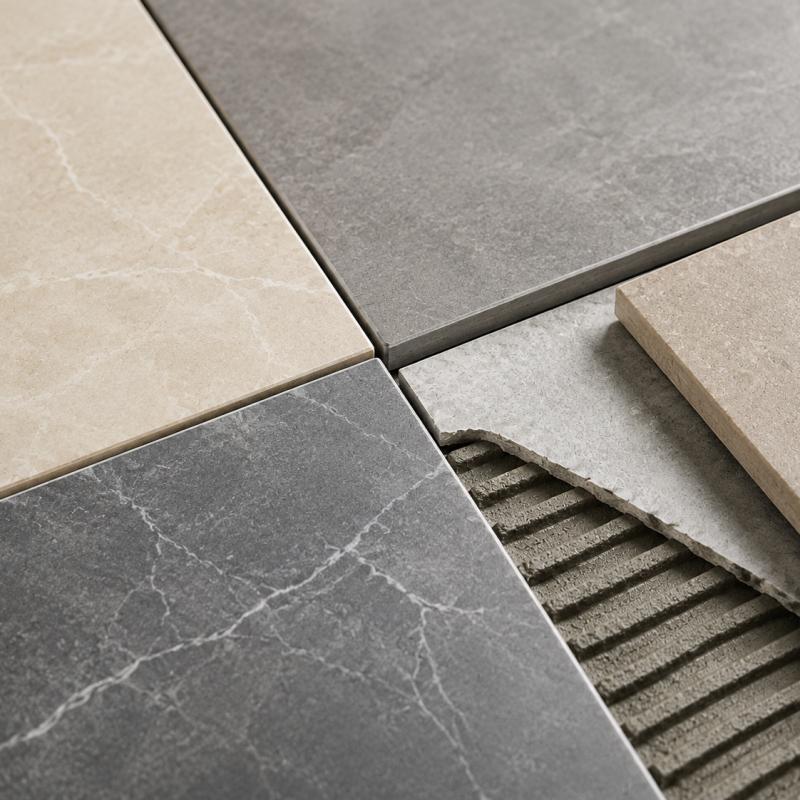
Another factor is poor installation. Without correct adhesive coverage, hollow spots may form under ceramic tile flooring, increasing the risk of breakage when weight is applied.
Temperature changes can also play a role. In areas exposed to heat or cold fluctuations, expansion and contraction may cause stress, especially if expansion joints are missing.
Heavy impact is another obvious cause. Dropping heavy objects on porcelain tile flooring or dragging furniture without protection can lead to surface cracks or chips.
3. Are Certain Tile Types More Crack-Resistant?
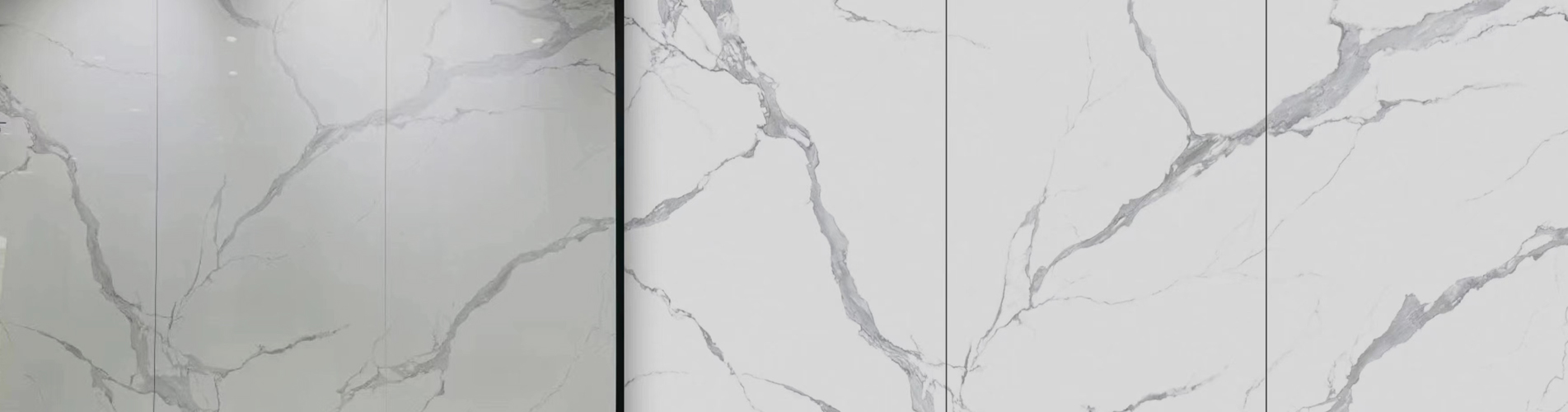
Yes. Not all tiles perform the same under stress. For example, large format tiles often require more precise installation because their size makes them less forgiving on uneven surfaces. However, when installed correctly, they provide a modern look and strong durability.
Similarly, anti slip tiles used in bathrooms or outdoor areas are designed with textured surfaces, which may slightly affect structural uniformity, but they are engineered to maintain strength while improving safety.
In general, high-quality porcelain tiles for kitchen and bathrooms tend to perform better in moisture-prone environments compared to standard ceramic options.
4. How to Prevent Tile Cracking
Preventing cracks is mainly about proper preparation and installation rather than just choosing expensive materials.
A well-prepared, level subfloor is essential. Professional installers usually apply a suitable underlayment to reduce stress distribution problems.
Using high-quality adhesive also ensures full coverage beneath floor tiles, eliminating weak hollow spots.
Expansion joints should always be included in larger areas to allow natural movement of materials.
Finally, proper maintenance matters. Avoid dragging heavy furniture directly across ceramic tiles and use protective pads whenever possible.
5. Conclusion
So, do porcelain tiles or ceramic tiles crack easily? The truth is that both are durable materials when used correctly. However, porcelain tile flooring is generally more resistant to cracking due to its higher density and strength.
Most tile failures are not caused by the tile itself but by installation issues or structural movement beneath the surface. With proper installation and care, both options can last for many years while maintaining their appearance and performance.
 Do Porcelain or Ceramic Tiles Crack Easily?









 IPv6 network supported