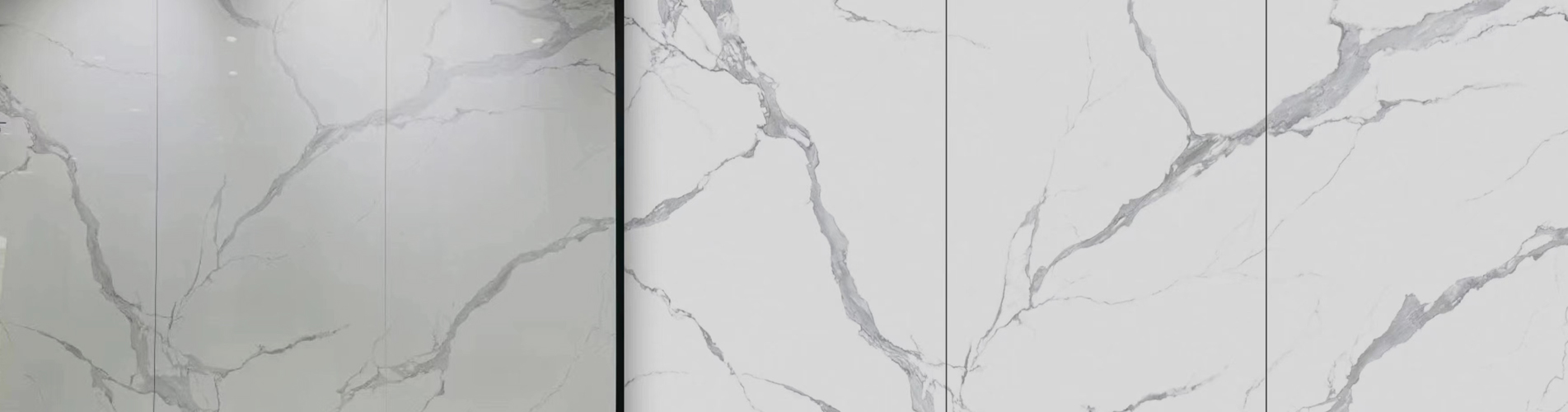
When choosing tiles for residential, commercial, or outdoor applications, water absorption is one of the most important technical specifications to consider. Many buyers focus on appearance, color, size, and surface finish, but the water absorption rate directly affects the durability, strength, and performance of a tile.
For professional buyers, architects, contractors, and distributors, understanding porcelain tile water absorption is essential when selecting the right material for different projects.
In simple terms, water absorption refers to the amount of water a tile can absorb through its pores after being exposed to water. A lower absorption rate means the tile has a denser body structure, higher durability, and better resistance to moisture.
Water absorption is measured as the percentage of water absorbed by the tile compared with its dry weight.
For example, if a tile weighs 1000 grams when dry and absorbs 5 grams of water, its water absorption rate is 0.5%.
According to international tile standards, porcelain tiles are generally defined as tiles with a water absorption rate of ≤0.5%. This low absorption level indicates that the tile body is highly compact and has very limited open pores.
Because of this dense structure, porcelain floor tiles offer excellent performance in areas exposed to moisture, heavy traffic, temperature changes, and daily wear.
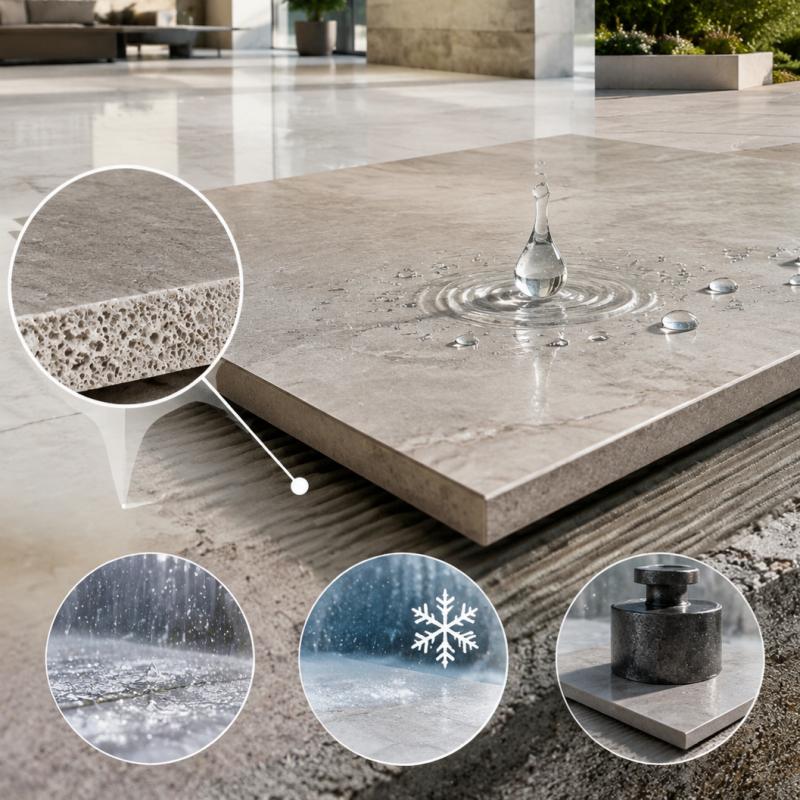
The term “porcelain” does not simply refer to the appearance or color of a tile. It describes the technical characteristics of the tile body.
During production, porcelain tiles are manufactured using carefully selected raw materials and fired at very high temperatures. This process creates a highly vitrified and dense structure with minimal porosity.
When the water absorption rate reaches ≤0.5%, the tile has achieved a level of density similar to natural stone materials. This is why these products are classified as porcelain tiles rather than standard ceramic tiles.
The low absorption rate provides several advantages:
For projects requiring long-term durability, low water absorption porcelain tiles are often the preferred choice.
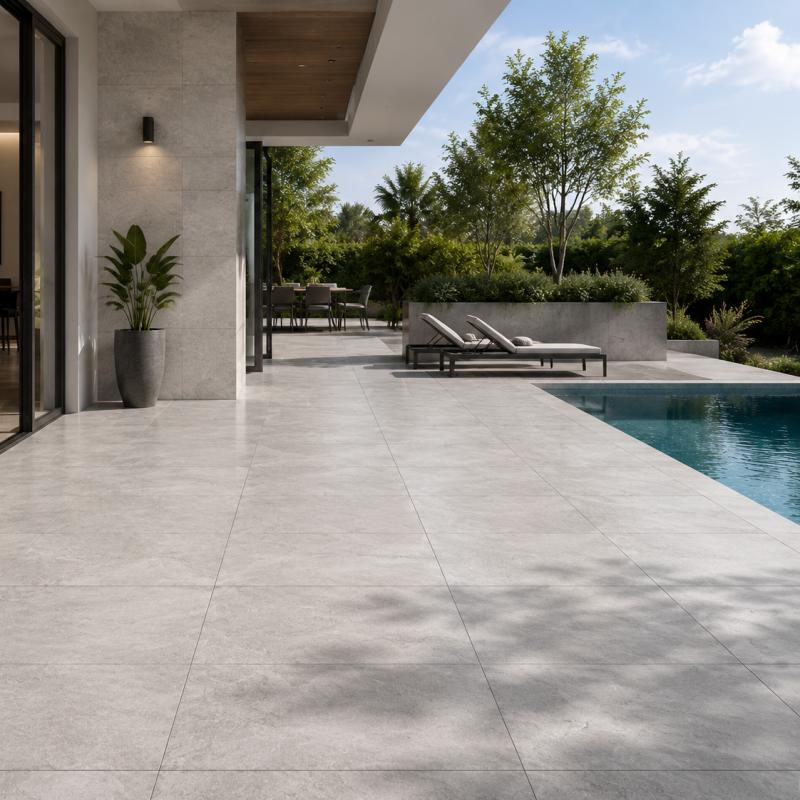
Outdoor environments expose tiles to much harsher conditions compared with indoor spaces. Rain, humidity, temperature changes, and freezing conditions can all affect tile performance.
For outdoor applications, buyers usually prioritize outdoor porcelain tiles with very low water absorption because moisture inside the tile can create serious problems.
When water enters a tile with high porosity, repeated freeze-and-thaw cycles can cause:
This is especially important in regions with cold winters.
For patios, balconies, gardens, swimming pool areas, exterior walkways, and public spaces, porcelain outdoor tiles with water absorption below 0.5% provide better resistance against weather conditions.
Even in warm and humid regions, low absorption tiles help prevent moisture-related issues such as:
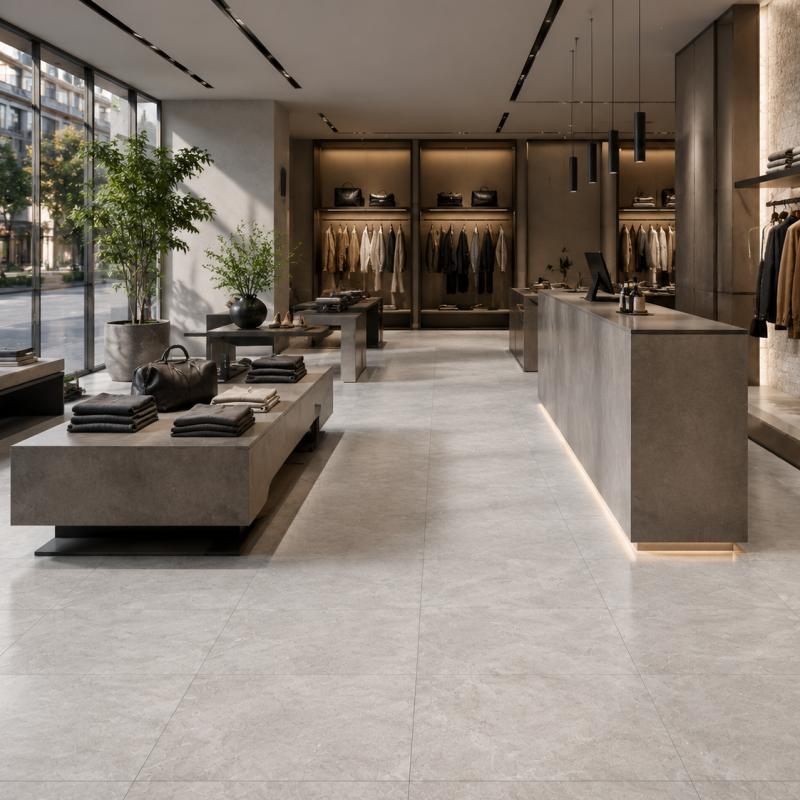
Commercial buildings usually experience much higher levels of foot traffic than residential spaces. Shopping malls, hotels, airports, restaurants, offices, and public facilities require flooring materials that can maintain performance for many years.
For these applications, contractors often choose commercial porcelain tiles because of their strength, durability, and low maintenance requirements.
A lower water absorption rate helps commercial tiles provide:
Dense porcelain tile bodies are harder and more resistant to impact, making them suitable for high-traffic areas.
Because porcelain tiles absorb very little water, they are less likely to absorb dirt, liquids, and stains.
This makes easy clean porcelain tiles a popular option for hotels, restaurants, and commercial buildings.
Commercial floors may face cleaning chemicals, moisture exposure, and temperature fluctuations. Durable porcelain floor tiles can handle these challenges better than many traditional flooring materials.
Many buyers ask about the difference between ceramic tiles and porcelain tiles. Although both are made from natural clay materials, their production methods and performance characteristics are different.
| Feature | Ceramic Tile | Porcelain Tile |
|---|---|---|
| Water Absorption | Usually higher than 0.5% | ≤0.5% |
| Body Structure | More porous | Highly dense |
| Strength | Moderate | Higher strength |
| Durability | Suitable for general indoor use | Suitable for heavy-duty applications |
| Outdoor Use | Limited | Excellent |
| Maintenance | Requires more care | Easy to maintain |
Generally, ceramic wall tiles are commonly used for indoor walls because they are lightweight and easy to install.
On the other hand, porcelain floor tiles are preferred for floors, outdoor areas, and commercial applications because they provide better resistance to impact, moisture, and wear.
However, this does not mean ceramic tiles are inferior. The right choice depends on the application. For example:
Water absorption is closely connected with several important tile performance factors.
A denser tile body usually provides higher mechanical strength. This makes heavy duty porcelain tiles suitable for areas with frequent use and heavy loads.
Low absorption means less water can enter the tile structure. This reduces the risk of damage caused by freezing temperatures.
Tiles with fewer pores are less likely to absorb liquids such as coffee, oil, or chemicals.
This is why many buyers select stain resistant porcelain tiles for kitchens, restaurants, and commercial spaces.
A dense tile structure helps maintain color stability and surface performance over time.
In most flooring and outdoor applications, lower water absorption provides better technical performance. However, the ideal tile depends on the project requirements.
For example:
Therefore, buyers should consider:
Choosing the correct tile specification ensures better performance and avoids unnecessary costs.
When purchasing tiles for construction projects, buyers should look beyond design and focus on technical specifications.
Important factors include:
For international projects, 600x600 porcelain tiles, 600x1200 porcelain tiles, and other large format porcelain tiles are increasingly popular because they provide a modern appearance with fewer grout lines.
For hotels, residential developments, shopping centers, and outdoor projects, selecting a reliable porcelain tile manufacturer ensures consistent quality, stable supply, and professional customization support.
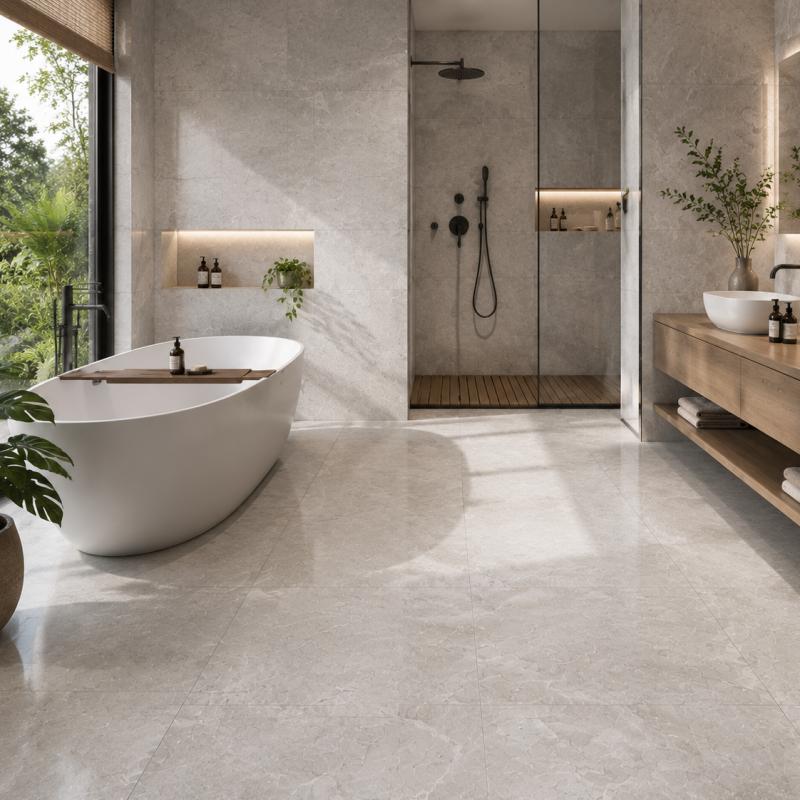
Water absorption is one of the most important indicators of porcelain tile quality. A water absorption rate of ≤0.5% defines porcelain tiles and represents a dense, durable, and highly resistant tile structure.
Compared with traditional ceramic tiles, porcelain tiles provide better performance in demanding applications such as outdoor areas, commercial buildings, and high-traffic floors.
For buyers searching for durable, low-maintenance, and long-lasting flooring solutions, understanding water absorption helps make a more informed decision and choose the right tile for every project.









 IPv6 network supported