Natural stone has been used in architecture and interior design for centuries. Materials such as marble, limestone, travertine, and slate are known for their unique textures, natural color variations, and timeless appearance. However, as modern construction projects become more focused on practicality, consistency, and cost control, more buyers are looking for alternatives that can reproduce the appearance of natural stone while offering easier everyday use.
This is one of the main reasons Natural Stone Look Porcelain Tile is becoming increasingly popular. Modern porcelain manufacturing technology can reproduce the patterns, colors, veins, and textures of natural stone with a high level of realism. At the same time, porcelain offers low water absorption, good durability, and a wide selection of sizes and finishes.
So, what is driving this growing interest, and why are stone-look porcelain tiles becoming an important choice for modern interiors?
1. Natural Stone Appearance with Practical Performance
The biggest advantage of Stone Look Tile is its ability to combine natural aesthetics with the practical characteristics of manufactured tile.
Natural stone can be beautiful, but different types of stone have different levels of porosity and maintenance requirements. Some natural stone surfaces may require sealing and regular care, particularly when they are used in areas exposed to moisture or stains.
Porcelain is manufactured under controlled conditions and is known for its low water absorption. Porcelain products classified under commonly used industry standards generally have water absorption of 0.5% or less.
This makes Porcelain Tile an attractive option for bathrooms, kitchens, living rooms, hotels, restaurants, and other areas where moisture resistance and easy maintenance are important.
For buyers who want a natural stone appearance without relying entirely on the maintenance requirements of genuine stone, porcelain provides a practical alternative.
2. Digital Printing Has Improved Realism
Technology is another major reason for the growing popularity of stone-look porcelain.
Traditional ceramic tile printing was more limited, which could result in repetitive patterns across a large installation. Modern digital inkjet printing has dramatically expanded what manufacturers can achieve.
High-resolution printing can reproduce detailed marble veins, mineral variations, cloudy backgrounds, limestone textures, and other natural patterns. Manufacturers can also create multiple faces of the same design, helping reduce visible repetition after installation.
Modern production can combine printed graphics with surface textures. When the visual pattern and physical texture work together, the finished product can create a more convincing interpretation of natural stone.
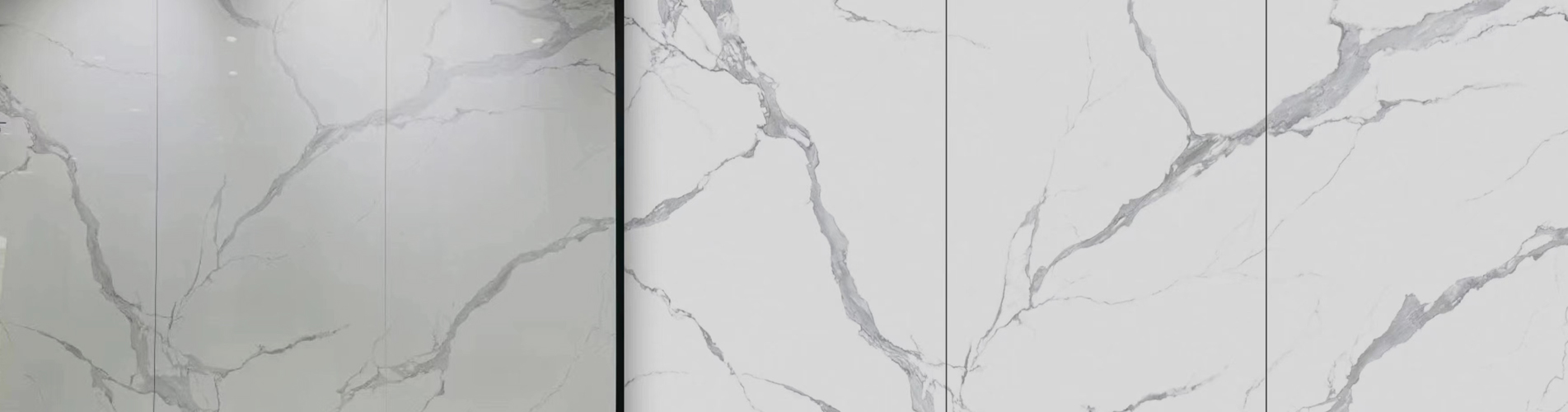
This development is especially important for Marble Look Tile, where the character of the design often depends on detailed veining and subtle color variation.
3. Marble Look Tile Remains Highly Popular
Among different natural stone effects, marble continues to have strong appeal.
White and light-colored marble designs are particularly popular because they can make interiors feel brighter and more spacious. Grey veins, soft beige backgrounds, and dramatic patterns can also be used to create different design styles.
Marble Look Tile can be used in residential and commercial environments, including bathrooms, kitchens, hotel lobbies, restaurants, retail stores, and living spaces.
Compared with genuine marble, porcelain can provide more predictable sizing and manufacturing consistency. This can be especially useful for large projects where buyers need to order substantial quantities of material with consistent specifications.
For customers searching for Marble Tile, marble-effect porcelain therefore provides another way to achieve a similar visual style while using a manufactured surface.
4. Large Formats Create a More Modern Appearance
The increasing popularity of large-format surfaces is also contributing to demand for stone-look porcelain.
Smaller tiles create more grout lines, while Large Format Porcelain Tile can create a cleaner and more continuous visual effect. This is particularly effective when the tile features a marble, limestone, or other natural stone pattern.
For example, 600×1200mm porcelain tiles can allow the stone pattern to extend across a larger surface with fewer visible joints. Larger formats can also help create a sense of openness in contemporary interiors.
This is one reason large-format porcelain is increasingly considered for living rooms, hotel spaces, commercial projects, feature walls, and modern bathrooms.
The combination of large dimensions and realistic stone patterns allows porcelain to become more than simply a functional flooring material. It can also become an important visual element within the overall interior design.
5. Suitable for Floors and Walls
Another reason Stone Look Porcelain Tile is becoming more popular is its versatility.
It can be used for both floors and walls, depending on the product's specifications and intended application.
In bathrooms, marble-look or limestone-look Bathroom Tile can create a clean and relaxing atmosphere. Large-format tiles can also reduce the number of grout lines and create a more unified appearance.
In kitchens, stone-inspired Kitchen Tile can complement cabinets, countertops, and other interior materials. Grey, beige, cream, and white stone patterns can work with many different color schemes.
For living rooms, stone-look Floor Tile can create a strong foundation for contemporary, minimalist, or natural interior styles.
Commercial projects can also benefit from this versatility. Hotels, restaurants, offices, shopping spaces, and other projects can use coordinated stone-look tiles across different areas to create a consistent design concept.
6. Matte Finishes Make Stone Effects Look More Natural
Glossy surfaces have traditionally been popular for many ceramic and porcelain tile collections, but matte finishes are becoming increasingly important for natural stone designs.
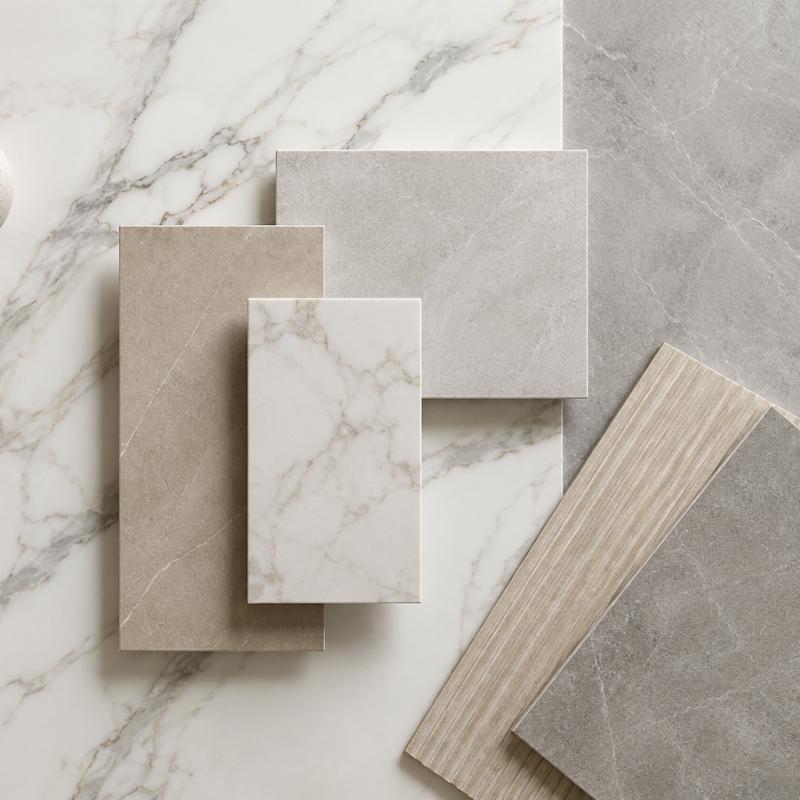
Matte Porcelain Tile can create a softer and more understated appearance. This can make the product look closer to materials such as limestone, slate, and other naturally textured stones.
Matte finishes also work well with current interior design preferences for warm neutral colors, natural wood, soft fabrics, and minimalist furniture.
For example, a light grey matte stone-look tile can create a calm contemporary atmosphere, while a warm beige matte tile can provide a more natural and welcoming appearance.
The combination of realistic stone patterns and matte surfaces makes porcelain suitable for buyers who want a natural appearance without an overly reflective finish.
7. More Consistency for Large Projects
Natural variation is one of the most attractive characteristics of genuine stone, but it can also create challenges for large construction projects.
A project may require thousands of square meters of tile, and buyers often need relatively consistent colors, sizes, finishes, and specifications.
Manufactured porcelain allows these characteristics to be controlled more systematically. At the same time, manufacturers can intentionally create several different faces within a collection to maintain a natural appearance.
This balance between controlled production and visual variation is valuable for architects, contractors, developers, distributors, and wholesalers.
For large projects, Porcelain Floor Tile can therefore provide both design flexibility and more predictable product specifications.
8. A Wider Range of Colors and Patterns
Natural stone is limited by the characteristics of the stone available from specific quarries. Porcelain manufacturers have much greater flexibility when developing new designs.
A stone-look collection can include white marble, grey marble, beige limestone, warm travertine-inspired patterns, dark slate effects, and many other visual styles.
Different sizes and finishes can also be developed for different applications.
This flexibility is particularly useful for international markets. Tile preferences can vary significantly from one region to another, and buyers may look for different colors, formats, or finishes depending on local design trends.
Manufacturers can respond to these requirements by developing different collections and offering options such as OEM and ODM customization.
9. Natural Interior Design Is Driving Demand
The popularity of stone-look porcelain is also connected to a broader preference for natural-inspired interiors.
Modern spaces increasingly use earthy colors, wood textures, stone surfaces, plants, and other natural elements to create a comfortable atmosphere.
Stone-look porcelain fits naturally into this design direction. It provides the visual character of natural materials while allowing designers to work with a manufactured product available in standardized sizes and finishes.
This makes Ceramic Tile and porcelain tile suitable for both modern minimalist interiors and warmer, more traditional spaces.
Instead of using natural stone everywhere, designers can combine stone-look porcelain with wood, metal, glass, and fabric to create layered and balanced interiors.
10. Better Value for Modern Projects
Cost is another factor influencing material selection.
Natural stone can involve quarrying, processing, transportation, installation, and maintenance considerations. The final project cost can therefore vary depending on the type and origin of the stone.
Stone-look porcelain gives buyers another option. The price of porcelain varies according to material, size, finish, technology, and production requirements, but its standardized manufacturing process allows manufacturers to offer a wide range of products for different project budgets.
For wholesalers and project buyers, porcelain can also provide advantages in terms of repeatability and supply planning.
This does not mean porcelain is simply a cheaper replacement for natural stone. Its main advantage is that it offers a different combination of appearance, performance, manufacturing consistency, and design flexibility.
Conclusion
The growing popularity of Natural Stone Look Porcelain Tile is the result of several trends coming together.
Advances in digital printing and surface technology have made stone patterns more realistic. Large formats have created cleaner and more continuous interiors, while matte finishes have strengthened the natural appearance of many designs.
At the same time, consumers and commercial buyers are looking for materials that combine attractive design with practical performance. Porcelain Tile, Marble Look Tile, Stone Look Tile, and other natural-inspired surfaces can meet these needs across bathrooms, kitchens, living rooms, hotels, restaurants, and commercial projects.
Natural stone will always have its own unique value because every piece is formed by nature. However, stone-look porcelain offers designers another way to achieve a similar visual language with greater control over size, design, finish, and manufacturing consistency.
As digital printing, surface technology, and large-format production continue to improve, natural stone-look porcelain tiles are likely to remain an important part of modern tile design.
FAQ
1. What are natural stone look porcelain tiles?
Natural stone look porcelain tiles are porcelain tiles designed to replicate the appearance of natural materials such as marble, limestone, travertine, and slate. Modern digital printing and surface technologies create realistic colors, veins, patterns, and textures while maintaining the practical characteristics of porcelain.
2. Are natural stone look porcelain tiles suitable for bathrooms?
Yes. Natural stone look porcelain tiles are widely used for bathroom floors and walls. Their low water absorption and wide range of designs make them suitable for creating marble, limestone, and other natural stone-inspired bathroom interiors.
3. Are stone look porcelain tiles easy to maintain?
Yes. Porcelain surfaces are generally easy to clean and maintain with regular care. Compared with some natural stones that may require sealing and specialized maintenance, stone look porcelain tiles can offer a more convenient option for everyday residential and commercial applications.
4. What sizes are available for natural stone look porcelain tiles?
Natural stone look porcelain tiles are available in various formats depending on the collection and application. Common options include 600×600mm, 300×600mm, and 600×1200mm, while larger formats are also available for projects that require fewer grout lines and a more continuous appearance.
5. Where can natural stone look porcelain tiles be used?
Natural stone look porcelain tiles can be used in many residential and commercial spaces, including bathrooms, kitchens, living rooms, hotels, restaurants, offices, and retail interiors. Different finishes, colors, patterns, and sizes allow them to match a wide range of interior design styles.
 Why Are Natural Stone Look Porcelain Tiles Becoming More Popular?









 IPv6 network supported