You want a small bathroom to feel bright and open. The best interior wall tile for bathroom spaces is large-format porcelain or glazed ceramic. Light, glossy finishes with tone-on-tone grout reflect light and resist moisture. This combination minimizes visual clutter and maximizes style.
Key Takeaways
Choose porcelain or glazed ceramic tile. These materials resist moisture and need no sealing. They keep your bathroom mold-free and easy to clean.
Use large-format tiles in light colors with a glossy finish and tone-on-tone grout. This trick reduces grout lines and makes the room feel bigger and brighter.
Install tiles in a vertical layout. This draws the eye upward and makes low ceilings seem taller. It creates a more open and spacious feel in a small bathroom.
Selecting the Right Material for Your Interior Wall Tile for Bathroom
Material choice determines how well your small bathroom handles moisture, how often you clean it, and how long your walls look fresh. You need a surface that resists water, wipes down easily, and reflects light. Porcelain and glazed ceramic both deliver these benefits. Porous stone does not.
Why Porcelain Is a Top Choice for Interior Wall Tile for Bathroom
Porcelain stands as the strongest option for wet spaces. Manufacturers fire porcelain at extremely high temperatures. This process creates a dense, non-porous tile body. Water absorption rates tell the full story:
Tile Type
Water Absorption Rate
Porcelain
Under 0.5% of its weight
Glazed Ceramic
3–7% of its weight (tile body)
Porcelain absorbs less than 0.5% water. Ceramic absorbs noticeably more. This difference explains why porcelain performs better in wet areas and outdoor applications. A small bathroom generates constant steam and splashes. Porcelain shrugs off that moisture without swelling, cracking, or growing mold.
Durability also separates porcelain from natural stone. Porcelain tile carries a PEI (Porcelain Enamel Institute) wear rating based on standardized abrasion testing. These ratings directly measure how well the glazed surface resists visible abrasion:
PEI 3 is suitable for typical residential floors.
PEI 4 to 5 is recommended for heavier traffic.
Porcelain tile carries a PEI Class 5 wear rating for heavy foot traffic, indicating it has passed the highest level of standardized abrasion testing.
Natural stone lacks a comparable abrasion rating. Its durability in small bathrooms also depends on water absorption. Porcelain absorbs less than 0.5% moisture. Porous natural stones like travertine absorb 3–13%. Porcelain resists moisture-related wear far better in wet bathroom conditions.
AONAV offers porcelain interior wall tile for bathroom projects that demand both strength and visual appeal. Their porcelain lines feature precise edges, consistent sizing, and finishes that suit compact spaces.
Glazed Ceramic: A Budget-Friendly and Practical Interior Wall Tile for Bathroom
Glazed ceramic gives you a practical alternative at a lower price point. The tile body itself absorbs 3–7% of its weight in water. That number sounds concerning for a bathroom. The glaze changes everything.
Manufacturers fire a liquid coating onto the ceramic surface. This glaze creates a protective layer. That layer resists stains, scratches, and moisture. The glaze partially offsets the tile body's higher absorption for interior wall use. You get a water-resistant surface without paying porcelain prices.
Glazed ceramic also offers tremendous design flexibility. You can find it in glossy, matte, textured, and patterned finishes. The material cuts easily during installation. This reduces labor costs. For a small bathroom renovation on a budget, glazed ceramic delivers excellent value.
AONAV produces glazed ceramic tiles with durable finishes and elegant designs. Their collection includes options specifically sized for small bathroom walls. You gain moisture resistance and refined style without overspending.
Materials to Avoid: Porous Stone in a Small Bathroom
Natural stone brings warmth and organic beauty to large, well-ventilated rooms. In a small bathroom, porous stone creates problems. Travertine absorbs 3–13% moisture. Limestone and sandstone behave similarly. These materials soak up water vapor from showers and sinks.
That absorbed moisture feeds mold and mildew. Stone also stains easily when it contacts soap, shampoo, and hard water minerals. Sealing helps, but sealers wear down. You must reapply them regularly. A small bathroom has limited airflow. Moisture lingers longer. Porous stone never gets a chance to dry completely.
Porcelain and glazed ceramic eliminate these concerns. Both materials resist moisture at the surface. You clean them with a damp cloth. No sealing, no special maintenance, no worry. For a small bathroom, skip the stone and choose a engineered tile instead.
Choosing the Perfect Size and Layout for Your Small Bathroom Tiles
Tile size and orientation change how you perceive a room. Choosing the right combination reduces visual clutter and makes your small bathroom feel larger. Larger tiles and smart layouts minimize the busyness that compact spaces cannot hide. You want a clean, continuous surface that tricks the eye into seeing more square footage than exists.
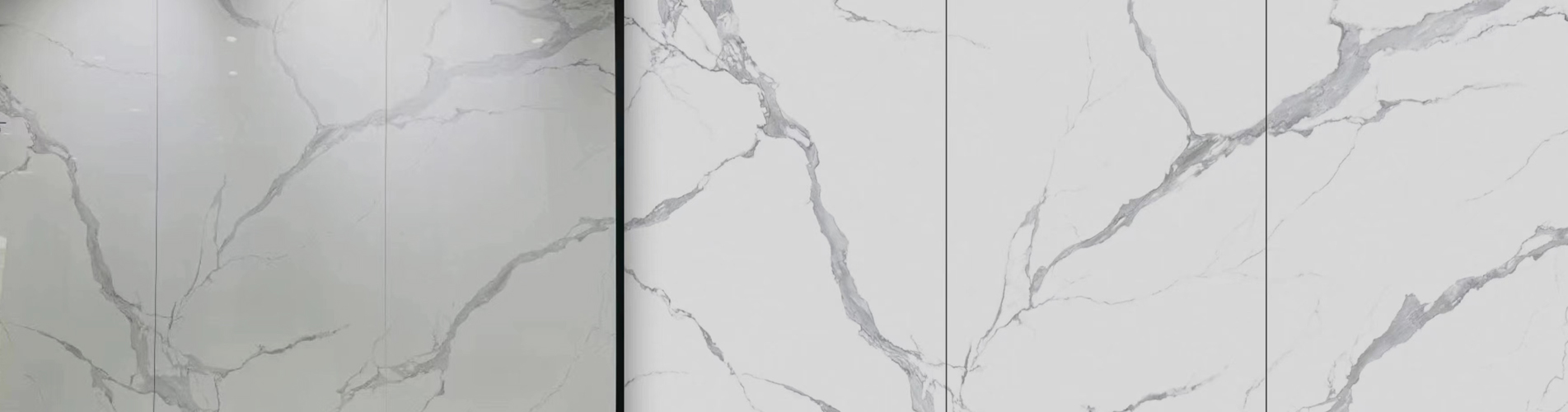
Large-Format Tiles: Fewer Grout Lines, Bigger Visual Impact
Grout lines break up your visual field. Every grout line marks a boundary, a visual stop that fragments the wall. Large-format tiles reduce those boundaries dramatically.
Industry experts (Dayna Holleyman, Laura Grilli, Paulo Pereira, Lindsey Waldrep) concur that large format tiles with fewer grout joints produce visual continuity and a seamless look, making small areas feel wider and more open.
You can see the difference in raw numbers. Compare how many grout lines you face per wall:
Tile Size
Grout Lines per 10 sq ft
6x6 inches
~40 lines
24x48 inches
~7 lines
Large-format tiles eliminate over 80 percent of the grout lines that smaller tiles create. Fewer lines mean a smoother, more uniform wall surface. Your eye glides across the tile face instead of stopping at every grout joint. That uninterrupted flow expands the perceived room dimensions. Choose a 24x48-inch or 12x24-inch tile for the biggest visual payoff in a compact bathroom.
Vertical Rectangular Layouts to Make Ceilings Seem Higher
Tile orientation directs where your gaze travels. You control that direction when you choose a layout.
Vertical layouts are recommended for rooms with low ceilings or compact footprints because vertical grout lines draw the eye upward, creating an illusion of greater height and visually expanding the space vertically. This works best with full-height large slabs or small-format elongated tiles.
The perceptual science behind this effect is well documented. Different tile arrangements produce specific spatial experiences. The table below shows how layout direction alters your perception:
Tile Layout
Perceptual Effect on Height
Perceptual Effect on Width
Mechanism
Vertical orientation
Makes standard ceiling heights appear dramatically taller
De-emphasizes restrictive width/depth
Directs observer attention upward via visual line emphasis
Horizontal orientation
Potentially reduces perceived height
Emphasizes width expansion
Opposite effect of vertical; valuable for narrow bathrooms
For a small bathroom with a standard 8-foot ceiling, vertical installation works best. Elongated tiles in a running bond or stacked pattern pull the eye up. You gain a sense of height that tricks the mind into feeling more space. Horizontal layouts suit very narrow rooms where width expansion matters more than vertical lift.
Matching Tile Scale to Wall Dimensions
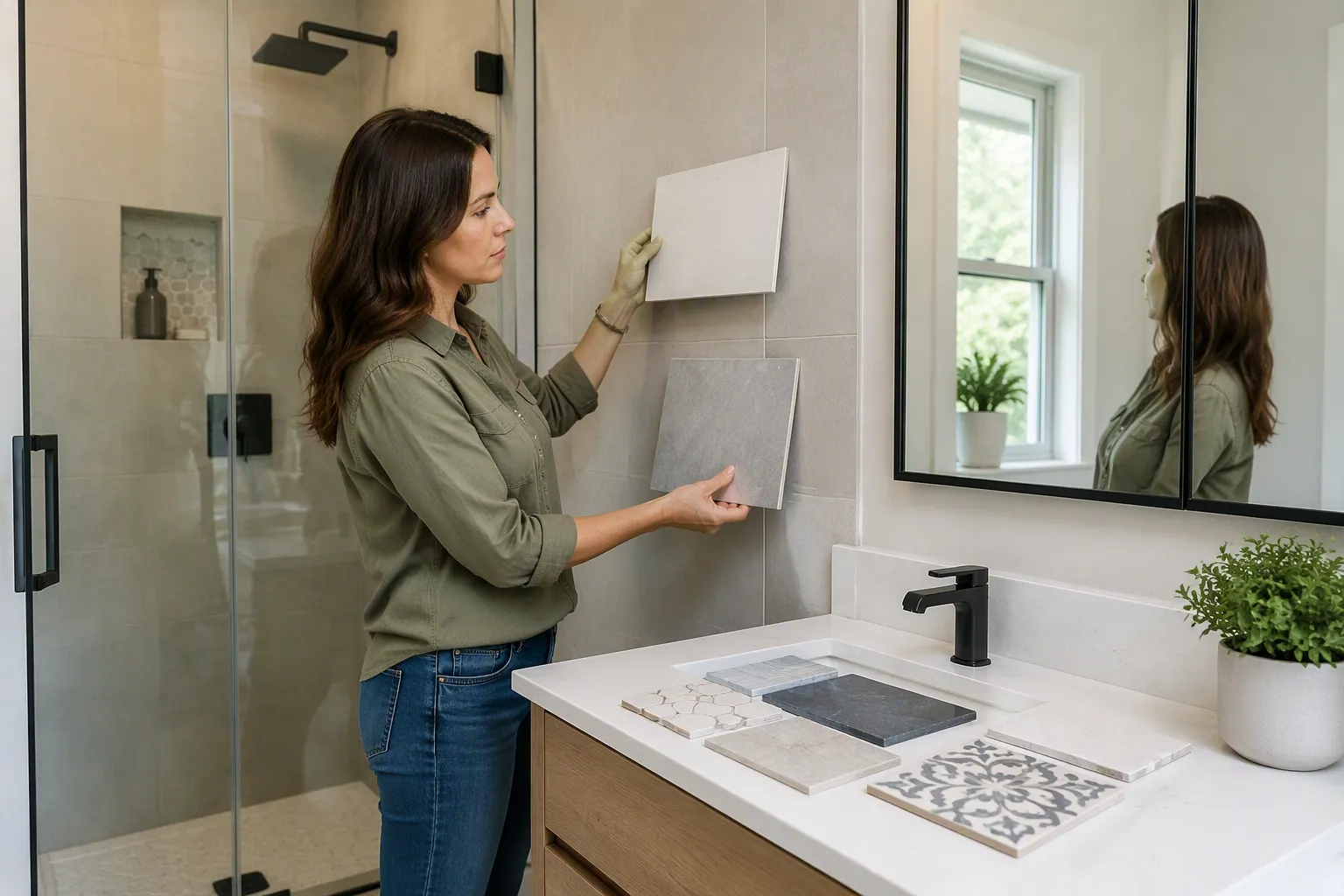
You must match tile size to your actual wall dimensions. A tile that looks beautiful in a showroom can look wrong on a 5-foot wall.
For a small bathroom, 12"×24" or 24"×24" is described as the most balanced choice. These sizes keep the floor visually clean without overwhelming the space.
The following table shows what works for various bathroom sizes:
Tile Size
Recommended For
Key Consideration
12x12 inch
Small bathroom floors and walls
Fits compact spaces without overwhelming proportions
12x24 inch
Floors and walls in medium-small bathrooms
Good balance of visual impact with manageable cuts
18x18 inch
Floors in small to medium bathrooms
Classic size for an expansive floor feel
24x24 inch
Bathrooms 6x8 feet and larger
Dramatic effect; needs flat subfloor and professional install
12x48 inch
Shower walls and feature walls
Makes rooms feel taller; good for shower surrounds
Avoid 24x48-inch tiles on a bathroom wall that is only 5 feet wide. Border rows would require cutting the tile into narrow strips. Those strips look awkward and create installation challenges. Choose a 12x24-inch or 12x12-inch tile instead. The visual expansion effect remains strong, and you avoid awkward cuts at the edges. When you select the right tile scale, your interior wall tile for bathroom creates a balanced, spacious appearance rather than a fragmented, cramped one.
Using Color, Finish, and Grout to Brighten and Expand Your Bathroom
Color, finish, and grout work together to shape how large your bathroom feels. You can transform a cramped space into an airy retreat with the right combination.
Light Shades: The Go-To Colors for a Spacious Look
Light values expand perceived space. Color psychologists recommend pale blues, soft greens, warm whites, and light grays for small bathrooms. These high-lightness shades reflect more light and make walls recede visually.
Principle
Recommended Colors
Effect
Light values expand space
Pale blues, soft greens, warm whites, light grays
High lightness reflects light; walls recede
Monochromatic schemes
Three shades of one hue across walls, tile, trim
Eliminates visual breaks; space feels cohesive
Ceiling matches walls
Same light hue on ceiling and walls
Adds apparent 6–12 inches of height
Avoid saturated yellows and dark colors in windowless rooms. These shades trigger visual fatigue and fragment the space.
Glossy vs. Matte Finishes: Which Suits Your Interior Wall Tile for Bathroom?
Glossy and matte finishes serve different purposes. Glossy surfaces reflect light and make walls feel brighter. Matte surfaces hide water spots and dust better.
Factor
Matte Tile
Glossy Tile
Slip resistance
Better traction when wet
Slippery when wet
Spot visibility
Hides dust and water spots
Shows streaks and fingerprints
Best use
Bathroom floors
Walls and shower surrounds
Bathrooms work best with matte floors and glossy walls. Glossy walls add reflectivity. Matte floors provide safety.
Adding a Single Accent Wall Without Overwhelming the Space
One accent wall adds visual interest without creating clutter. Choose a slightly darker shade or a textured pattern for the wall behind your sink or shower. Keep the remaining walls light and uniform. This balance prevents the room from feeling busy.
Tone-on-Tone Grout for a Seamless Appearance
Grout color affects how seamless your interior wall tile for bathroom looks. Choose grout that matches your tile color or stays similarly light. Matching grout reduces the appearance of grout lines and limits visible interruptions across the surface. Your walls appear continuous and larger.
You now hold the winning formula for a small bathroom. Choose a water-resistant material like porcelain or glazed ceramic. Select large-format tiles in light colors with a glossy finish and matching grout. Consider brands like AONAV for high-quality interior wall tile for bathroom. Their glazed ceramic and porcelain options deliver durability, moisture resistance, and elegant finishes perfect for small spaces. Use this quick checklist before you buy:
Water-resistant material
Large-format tiles
Vertical layout
Light color
Glossy finish
One accent wall
Tone-on-tone grout
Shop with confidence using these guidelines. Your small bathroom can feel spacious, bright, and stylish.
FAQ
What size interior wall tile for bathroom works best in a small space?
Choose large-format tiles like 12x24 inches or 24x48 inches. These sizes reduce grout lines and create visual continuity. Your small bathroom will feel more open and spacious.
Should you match grout color to your tile?
Yes. Tone-on-tone grout creates a seamless surface. Matching grout minimizes visible interruptions and makes your walls appear larger. Light grout with light tile works best.
Is porcelain better than ceramic for a small bathroom?
Porcelain absorbs less water and offers superior durability. Glazed ceramic provides a budget-friendly alternative with a protective glaze. Both resist moisture well for interior wall use.
 How to Choose the Best Interior Wall Tiles for a Small Bathroom









 IPv6 network supported