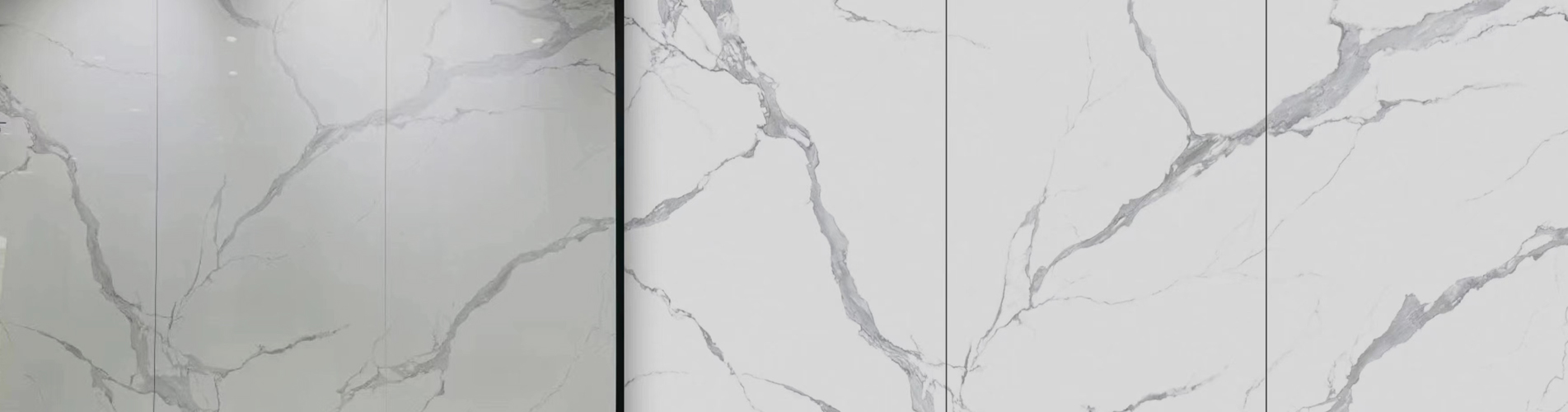
When buyers search for ceramic tiles or porcelain tiles, one common question often appears: Which country makes the best ceramic tiles?
In reality, the global ceramic tile industry is shaped by multiple manufacturing countries, each contributing different strengths in design, production, and supply capability.
Today, Italy, Spain, China, and India are widely recognized as key players in the international ceramic tile market. Understanding how each country positions itself helps buyers make smarter sourcing decisions.
Italy has long been associated with high-end ceramic tile design and innovation. Italian tiles are known for their artistic influence, refined finishes, and strong role in setting global design trends.
Italian manufacturers are particularly recognized for marble look porcelain tiles, large format tiles, and luxury interior applications. These products are often selected for premium residential projects and iconic architectural spaces where visual impact is a top priority.
While Italian ceramic tiles represent design excellence, they are typically produced in smaller volumes and come with higher costs, making them more suitable for niche or design-driven projects.
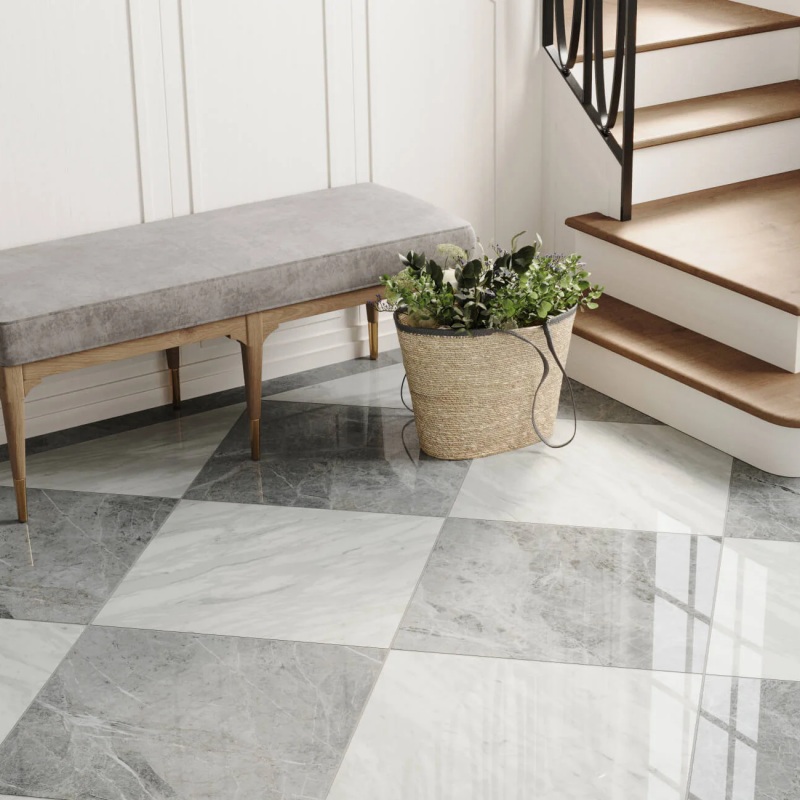
Spain is another well-established ceramic tile producer, offering a strong balance between contemporary design and functional performance. Spanish ceramic tiles often feature decorative patterns, textured surfaces, and modern styles suitable for residential and hospitality environments.
Spanish factories are especially competitive in ceramic wall tiles and porcelain floor tiles, providing consistent quality with relatively flexible pricing compared to other European producers. This balance makes Spain a stable option for buyers seeking European aesthetics with practical considerations.

China has become the world’s most influential ceramic tile manufacturing country, supplying ceramic tiles and porcelain tiles to virtually every major international market.
What sets Chinese ceramic tiles apart is the combination of large-scale production capacity, advanced manufacturing technology, and a complete product range. From standard ceramic wall tiles to marble look tiles and large format porcelain tiles, Chinese manufacturers are able to support both volume-driven distribution and project-based customization.
In recent years, continuous investment in digital printing, automated production lines, and quality control systems has significantly improved the consistency and surface realism of Chinese porcelain tiles. As a result, China has become the preferred sourcing destination for wholesalers, distributors, and project buyers who require stable supply, competitive pricing, and long-term reliability.
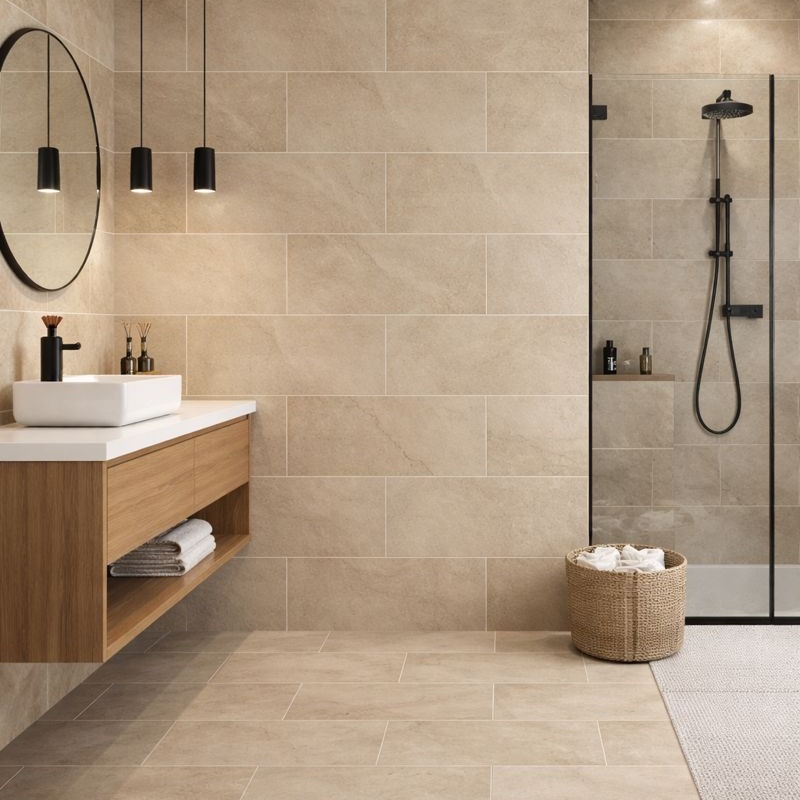
India has emerged as a fast-growing ceramic tile manufacturing hub, particularly in the last decade. With expanding production facilities and export-oriented growth, Indian ceramic tiles are increasingly present in global markets.
Indian manufacturers are active in porcelain tiles, polished tiles, and large format tiles, offering attractive pricing for cost-sensitive regions. While the industry is still evolving in terms of consistency and large-scale customization, India plays an increasingly important role as an alternative sourcing option for international buyers.
Rather than identifying a single “best” country, it is more accurate to recognize how different countries serve different market needs:
Italy leads in design inspiration and luxury ceramic tile concepts.
Spain offers European style with functional reliability.
China delivers the most complete ceramic and porcelain tile solutions, combining scale, technology, and supply stability.
India provides growing manufacturing capacity and cost-driven alternatives.
For buyers focused on long-term supply, consistent quality, and product versatility, China continues to play a central role in the global ceramic tile industry.
The global ceramic tile market is more diversified than ever. Successful sourcing today depends on understanding manufacturing strengths rather than relying on reputation alone.
As international demand continues to grow, countries with strong production capability, technical maturity, and flexible supply systems are becoming increasingly important. By evaluating these factors, buyers can confidently select ceramic tiles and porcelain tiles that meet both current market needs and future growth plans.









 IPv6 network supported